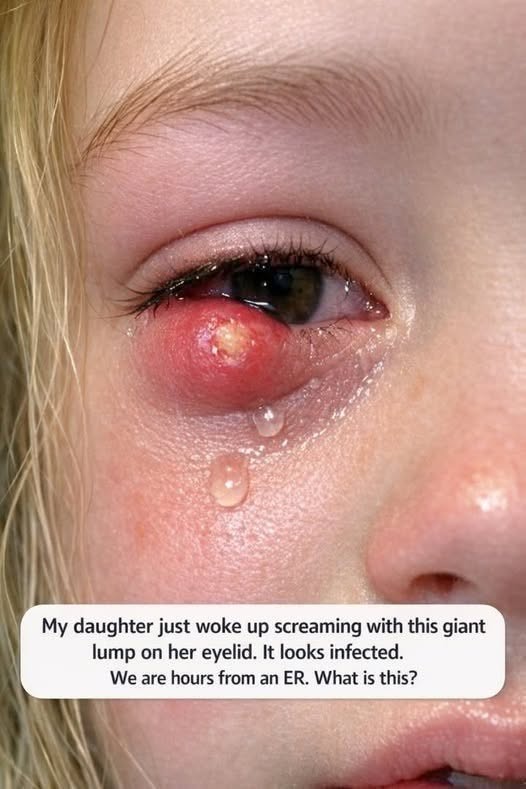
My Child Woke Up Screaming With a Giant Eyelid Lump: A Parent’s Guide to Styes, Infections, and When to Seek Help
Few things are more frightening for a parent than seeing a child wake up with a suddenly swollen, painful eyelid.
A small bump on the eyelid may be something as common as a stye, but significant swelling can sometimes have another cause, including an infection that requires prompt medical attention.
The good news is that many eyelid lumps are minor and improve with simple care. Knowing what to look for can help parents decide when home care is reasonable and when a child needs medical evaluation.
What Is a Stye?
A stye, also called a hordeolum, is a tender, usually red lump that develops along the edge of the eyelid. It commonly occurs when an eyelid gland becomes blocked or infected.
A stye may cause:
- A painful bump on the eyelid
- Redness or swelling
- Tenderness when touched
- Watery eyes
- A sensation that something is in the eye
Some styes develop a small yellowish spot containing pus.
Could It Be a Chalazion?
Not every eyelid lump is a stye.
A chalazion occurs when an oil-producing gland in the eyelid becomes blocked. Unlike a typical stye, a chalazion is often less painful and may feel like a firm lump deeper inside the eyelid.
A chalazion can sometimes become quite noticeable, particularly when it causes surrounding swelling.
When Swelling May Mean Something More Serious
A very swollen eyelid can occasionally be associated with an infection around the eye.
Parents should pay particular attention if the child has rapidly increasing swelling, significant redness, fever, severe pain, pain when moving the eye, vision changes, or the eye appears to bulge.
These symptoms can require urgent medical assessment because infections involving the tissues around the eye can become serious.
What Can Parents Do at Home?
If the child otherwise feels well and the lump appears consistent with a simple stye, a warm, clean compress may help.
Place the comfortably warm compress over the closed eyelid for several minutes at a time. Use a clean cloth each time and avoid squeezing or attempting to pop the lump.
Good hand hygiene is also important. Encourage your child not to rub or scratch the affected eye.
Do not put leftover prescription eye drops, ointments, or other medications into the eye unless a healthcare professional has recommended them for this particular problem.
When Should You Contact a Doctor?
Arrange medical evaluation if the swelling is getting worse, does not begin improving, repeatedly returns, or is causing substantial discomfort.
Seek urgent medical care if your child develops:
- Fever along with significant eyelid swelling
- Severe or rapidly worsening pain
- Pain when moving the eye
- Changes in vision
- Difficulty moving the eye
- A bulging appearance of the eye
- Severe redness or swelling spreading around the eye
- A child who appears unusually ill or lethargic
For babies and very young children, parents should have a lower threshold for seeking professional advice when significant eye swelling develops.
Don’t Panic—but Don’t Ignore Warning Signs
A dramatic-looking eyelid lump can be alarming, but many styes and blocked glands are not dangerous.
The important distinction is between a localized eyelid bump and symptoms suggesting a more extensive infection.
If you’re unsure what is causing your child’s swelling, a pediatrician or eye-care professional can examine the eye and determine whether treatment is necessary.
The Bottom Line
A sudden eyelid lump in a child is often caused by a stye or blocked eyelid gland, but severe swelling, fever, vision problems, significant pain, or pain with eye movement should not be dismissed.
When it comes to a child’s eyes, it’s better to seek medical advice when something looks unusually severe or is getting worse.
This article is for general educational purposes and does not replace an examination or medical advice from a qualified healthcare professional.