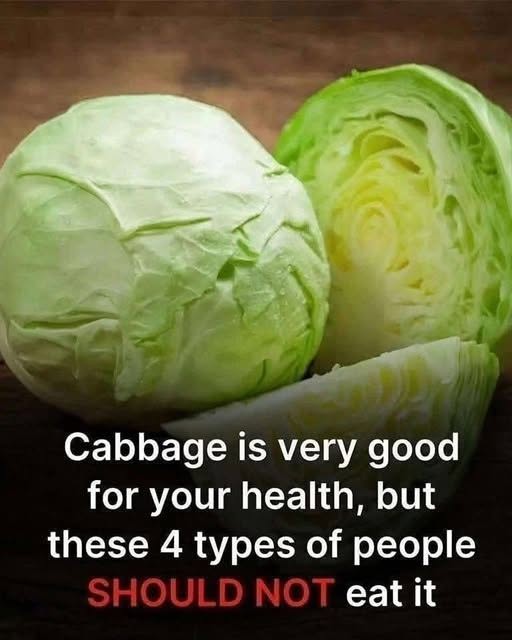
🥬 4 Types of People Who May Need to Be Careful With Cabbage
Cabbage is packed with nutrients and can be part of a healthy diet.
But here’s something many people don’t realize:
A healthy food isn’t necessarily ideal for everyone in every situation.
For some people, eating large amounts of cabbage can worsen digestive symptoms or interact with specific medical considerations.
Here are four groups who may need to be more careful.
1. People with IBS or sensitive digestion
Cabbage contains fermentable carbohydrates that can cause gas, bloating, abdominal discomfort, or changes in bowel habits in some people.
If you have irritable bowel syndrome (IBS) or a particularly sensitive digestive system, large portions may trigger symptoms.
What to do: Try a smaller serving and see how your body responds. Cooking cabbage may also make it easier for some people to tolerate.
2. People taking certain blood-thinning medications
Cabbage contains vitamin K, a nutrient involved in blood clotting.
If you’re taking the blood thinner warfarin, suddenly making major changes to your vitamin K intake can affect how the medication works.
This doesn’t mean you must avoid cabbage.
In fact, people taking warfarin are generally advised to keep their vitamin K intake consistent rather than eliminating vitamin-K-rich foods completely.
What to do: Talk with your healthcare professional before making major changes to your diet.
3. People with certain thyroid conditions
Cruciferous vegetables—including cabbage, broccoli, cauliflower, and kale—contain compounds known as glucosinolates.
In very large amounts, particularly when iodine intake is inadequate, these compounds may interfere with thyroid hormone production.
For most people eating normal amounts of cooked cabbage, this isn’t considered a reason to avoid it.
What to do: If you have thyroid disease or have been advised to monitor iodine intake, discuss your overall diet with your healthcare professional rather than eliminating vegetables unnecessarily.
4. People who notice cabbage consistently triggers digestive symptoms
Even without a diagnosed digestive disorder, some people simply don’t tolerate cabbage well.
You may notice:
- Excessive gas
- Bloating
- Cramping
- Abdominal discomfort
- Changes in bowel movements
That doesn’t mean cabbage is “bad.”
It simply means your body may not tolerate large amounts of it comfortably.
What to do: Reduce the portion, cook it thoroughly, and observe whether symptoms improve.
🥗 So, should you stop eating cabbage?
For most healthy people, no.
Cabbage provides fiber, vitamin C, vitamin K, folate, and other beneficial nutrients. It can be a nutritious addition to a balanced diet.
The key is portion size, preparation, and your individual health situation.
And remember: a viral headline saying “never eat cabbage if you have X” can be misleading.
If you take prescription medication or have a medical condition, don’t eliminate nutritious foods based solely on social-media claims.
❤️ Cabbage isn’t a miracle food—and it isn’t a dangerous food. It’s simply one nutritious vegetable that may need to be adjusted to fit certain people’s needs.
Cabbage is packed with nutrients and can be part of a healthy diet.
But here’s something many people don’t realize:
A healthy food isn’t necessarily ideal for everyone in every situation.
For some people, eating large amounts of cabbage can worsen digestive symptoms or interact with specific medical considerations.
Here are four groups who may need to be more careful.
1. People with IBS or sensitive digestion
Cabbage contains fermentable carbohydrates that can cause gas, bloating, abdominal discomfort, or changes in bowel habits in some people.
If you have irritable bowel syndrome (IBS) or a particularly sensitive digestive system, large portions may trigger symptoms.
What to do: Try a smaller serving and see how your body responds. Cooking cabbage may also make it easier for some people to tolerate.
2. People taking certain blood-thinning medications
Cabbage contains vitamin K, a nutrient involved in blood clotting.
If you’re taking the blood thinner warfarin, suddenly making major changes to your vitamin K intake can affect how the medication works.
This doesn’t mean you must avoid cabbage.
In fact, people taking warfarin are generally advised to keep their vitamin K intake consistent rather than eliminating vitamin-K-rich foods completely.
What to do: Talk with your healthcare professional before making major changes to your diet.
3. People with certain thyroid conditions
Cruciferous vegetables—including cabbage, broccoli, cauliflower, and kale—contain compounds known as glucosinolates.
In very large amounts, particularly when iodine intake is inadequate, these compounds may interfere with thyroid hormone production.
For most people eating normal amounts of cooked cabbage, this isn’t considered a reason to avoid it.
What to do: If you have thyroid disease or have been advised to monitor iodine intake, discuss your overall diet with your healthcare professional rather than eliminating vegetables unnecessarily.
4. People who notice cabbage consistently triggers digestive symptoms
Even without a diagnosed digestive disorder, some people simply don’t tolerate cabbage well.
You may notice:
- Excessive gas
- Bloating
- Cramping
- Abdominal discomfort
- Changes in bowel movements
That doesn’t mean cabbage is “bad.”
It simply means your body may not tolerate large amounts of it comfortably.
What to do: Reduce the portion, cook it thoroughly, and observe whether symptoms improve.
🥗 So, should you stop eating cabbage?
For most healthy people, no.
Cabbage provides fiber, vitamin C, vitamin K, folate, and other beneficial nutrients. It can be a nutritious addition to a balanced diet.
The key is portion size, preparation, and your individual health situation.
And remember: a viral headline saying “never eat cabbage if you have X” can be misleading.
If you take prescription medication or have a medical condition, don’t eliminate nutritious foods based solely on social-media claims.
❤️ Cabbage isn’t a miracle food—and it isn’t a dangerous food. It’s simply one nutritious vegetable that may need to be adjusted to fit certain people’s needs.