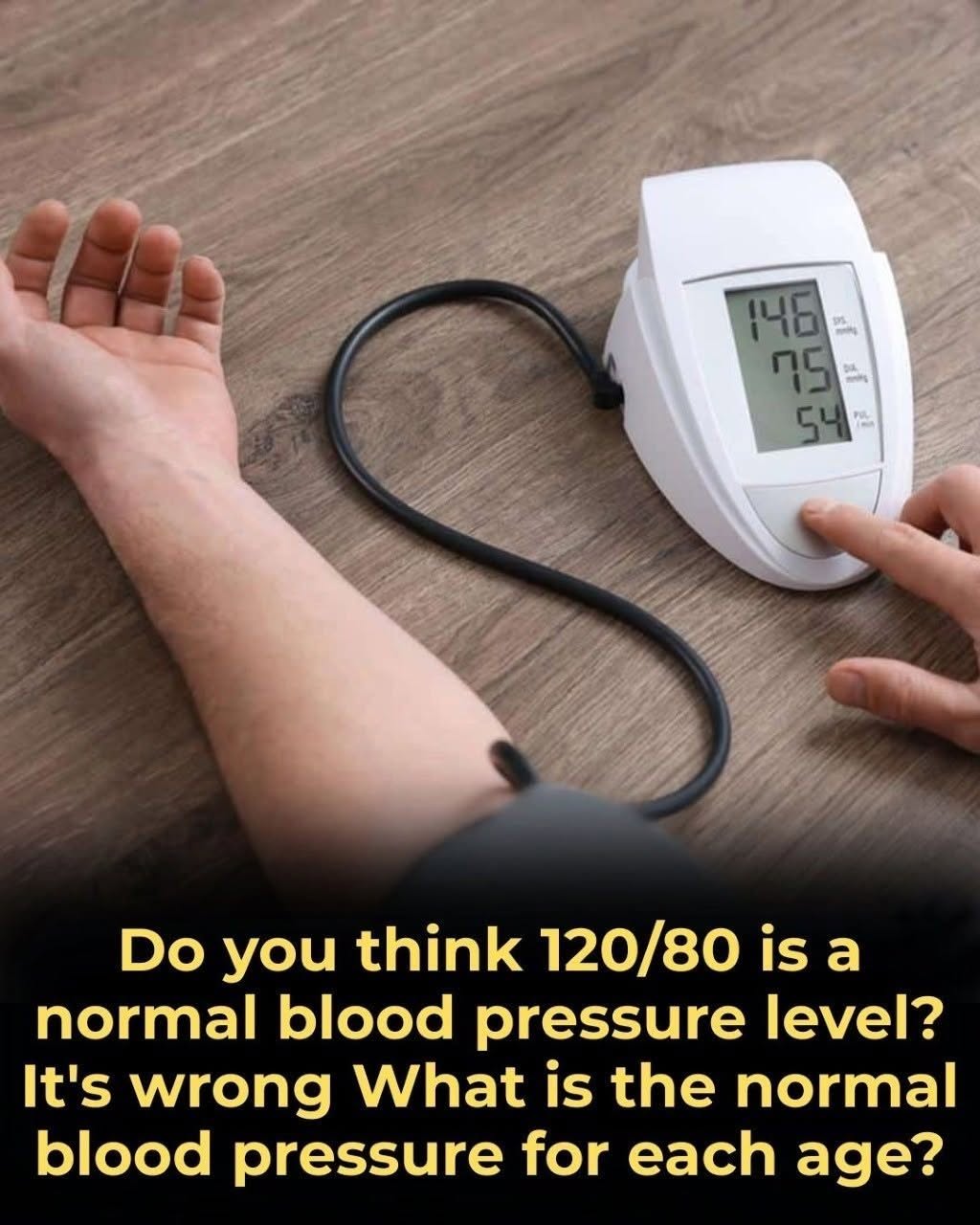
❤️ What Is a Normal Blood Pressure at Every Age? Here’s What You Should Know
You check your blood pressure and see 120/80.
Is that normal?
What if you’re 45?
What if you’re 65?
What if you’re 80?
Many people believe blood pressure is supposed to rise naturally with age. But while blood pressure patterns can change as we get older, high blood pressure shouldn’t simply be dismissed as “normal for your age.”
Here’s a simple guide.
👶 Children and teenagers
Blood pressure in children is different from adults.
A child’s healthy blood-pressure range depends on factors such as age, sex, and height, so there isn’t one number that applies to every child.
A pediatric healthcare professional should interpret a child’s reading using age-appropriate standards.
🧑 Adults
For most adults, commonly used categories are:
🟢 Normal
Less than 120/80 mm Hg
🟡 Elevated
120–129 systolic and less than 80 diastolic
🟠 High blood pressure — Stage 1
130–139 systolic or 80–89 diastolic
🔴 High blood pressure — Stage 2
140 or higher systolic or 90 or higher diastolic
A diagnosis generally shouldn’t be based on one isolated reading. Blood pressure can temporarily rise because of stress, exercise, caffeine, pain, illness, or even nervousness during a medical visit.
👵 What about people over 60 or 70?
This is where many social-media posts become misleading.
There isn’t a rule saying:
“If you’re over 60, 140/90 is normal.”
Older adults can develop high blood pressure, and treatment goals may be individualized based on overall health, other medical conditions, medications, frailty, and the risk of side effects.
So instead of asking:
“What’s normal for my age?”
it’s often better to ask:
“What blood-pressure target is appropriate for me?”
Your healthcare professional can help determine that.
🚨 When is blood pressure dangerously high?
A reading of 180/120 mm Hg or higher is severely elevated.
If you get a reading this high, sit quietly and repeat the measurement after a few minutes.
If it remains that high, contact a healthcare professional promptly.
If it is accompanied by symptoms such as chest pain, severe shortness of breath, weakness or numbness, confusion, difficulty speaking, or vision changes, seek emergency medical care immediately.
🩺 How to get a more accurate reading
Your blood-pressure number is only useful if the measurement is reasonably accurate.
Before checking:
✔️ Avoid exercise, caffeine, and smoking for about 30 minutes if possible.
✔️ Empty your bladder.
✔️ Sit quietly for at least 5 minutes.
✔️ Keep your back supported and both feet flat on the floor.
✔️ Rest your arm at heart level.
✔️ Use a properly sized upper-arm cuff.
✔️ Don’t talk while measuring.
✔️ Take more than one reading when appropriate.
❤️ The bottom line
120/80 isn’t a magic number that everyone must have.
And blood pressure doesn’t automatically become “healthy” simply because someone gets older.
For adults, a reading below 120/80 mm Hg is generally considered normal, while consistently higher readings may indicate elevated blood pressure or hypertension.
If your readings are repeatedly higher than normal, don’t panic—but don’t ignore them either.
Know your numbers, measure them correctly, and discuss persistent changes with your healthcare professional.
Your blood pressure is one of the simplest health measurements you can track—and one of the most important.