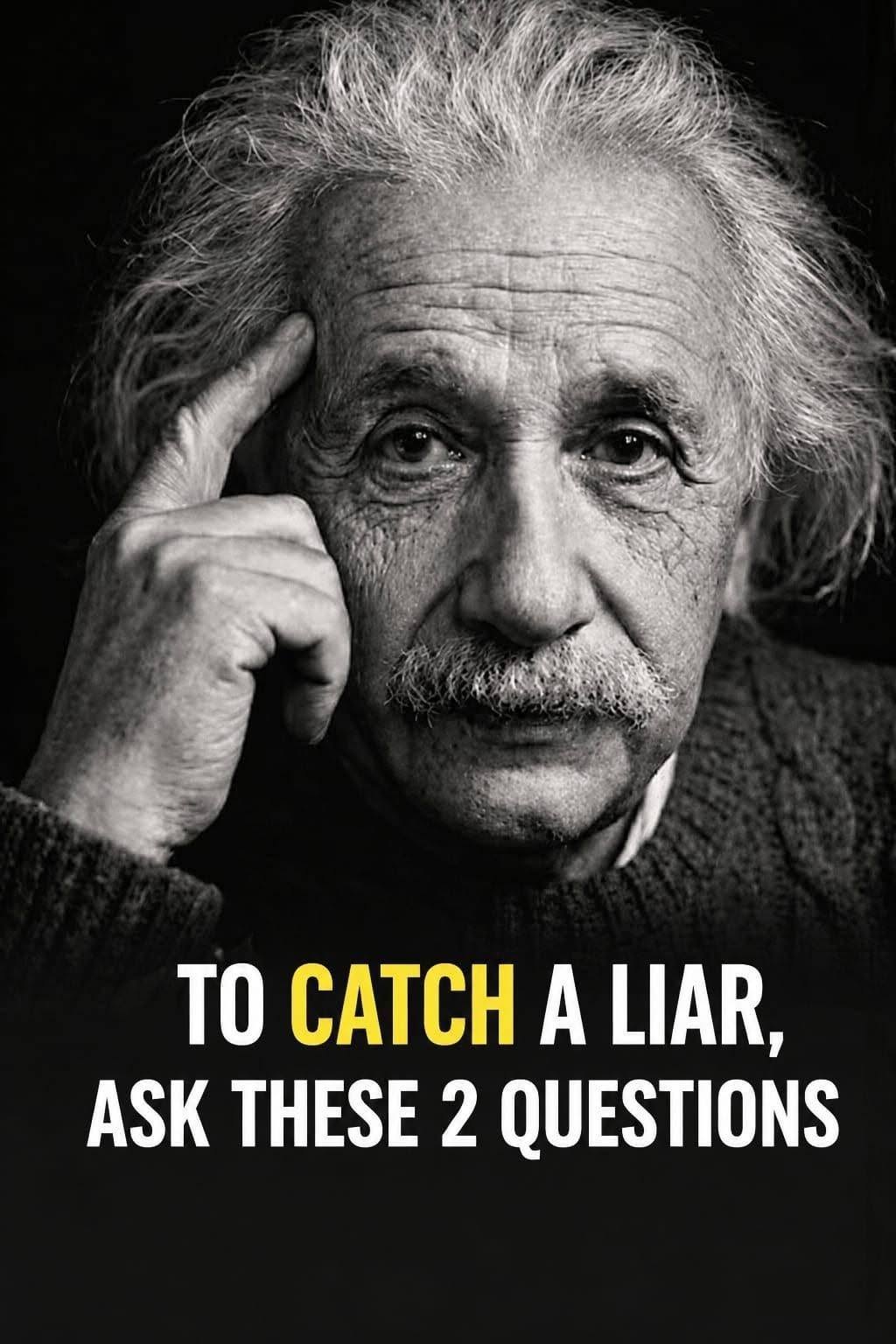
To Unmask a Liar, You Only Need to Ask Two Simple Questions—Or Do You?
The idea sounds almost too good to be true:
Ask a suspected liar two carefully chosen questions, and the truth will supposedly reveal itself.
You’ve probably seen versions of this advice online, often presented as a psychological trick used by detectives, interrogators, or body-language experts.
But there’s an important catch.
There is no pair of questions that can reliably prove someone is lying.
People can be nervous while telling the truth, and confident liars can appear completely calm.
Still, there are ways to ask questions that can make contradictions easier to notice.
Question #1: “Can you walk me through exactly what happened?”
Instead of immediately accusing someone, ask them to describe the situation in their own words.
Don’t fill in the details for them.
Let them explain.
Pay attention to whether their story is understandable and whether the major facts remain consistent when they explain it again later.
A person remembering a genuine event may naturally forget small details or describe things in a different order. That alone doesn’t mean they’re lying.
Question #2: “What happened next?”
This simple follow-up can encourage the person to provide a fuller timeline.
For example:
“You said you arrived at 7 p.m. What happened after that?”
The goal isn’t to trap someone.
It’s to clarify the sequence of events.
If important parts of the story repeatedly contradict one another, that’s a reason to ask more questions—not proof of deception.
🚨 Don’t rely on body language alone
You’ve probably heard claims that liars:
- Avoid eye contact
- Touch their face
- Fidget
- Cross their arms
- Look away
- Speak differently
These behaviors aren’t reliable lie detectors.
Someone might avoid eye contact because they’re anxious, embarrassed, neurodivergent, culturally accustomed to different eye-contact patterns, or simply uncomfortable with confrontation.
Likewise, a confident person can maintain eye contact while lying.
Look for evidence, not “tells”
If something important is at stake, the strongest approach is to compare a person’s account with independent evidence.
That could include messages, receipts, timestamps, photographs, records, or statements from other people.
Questions can reveal inconsistencies.
Evidence is what helps establish what actually happened.
A better way to think about the “two-question” trick
Rather than trying to catch someone in a lie, use questions to understand their story.
Try:
“Can you walk me through exactly what happened?”
Then:
“What happened next?”
Listen carefully.
If something doesn’t make sense, ask for clarification without immediately accusing the person.
The bottom line
There is no magic psychological formula that can identify every liar.
The most effective “lie detector” isn’t a facial expression, a nervous gesture, or two secret questions.
It’s careful questioning, consistency, corroborating evidence, and patience.
Sometimes the truth becomes obvious not because someone gives away a mysterious body-language signal, but because the facts simply don’t fit the story.