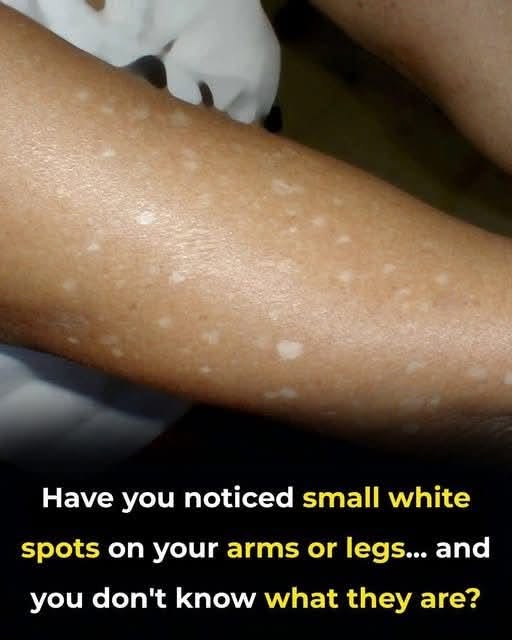
🤍 Small White Spots on Your Arms and Legs? Here’s What You Need to Know
Have you noticed tiny white spots appearing on your arms or legs? You might barely notice them at first, but over time, they can become more visible—especially after spending time in the sun. ☀️
Although these spots are often harmless, their appearance can sometimes signal a skin condition that deserves attention. Understanding the possible causes can help you decide when simple skin care is enough and when it’s time to consult a dermatologist.
🔍 What Causes Small White Spots on the Skin?
1. ☀️ Idiopathic Guttate Hypomelanosis
This common, harmless condition causes small, flat, pale or white spots, particularly on the forearms and shins. It becomes more common with age and is associated with cumulative sun exposure.
The spots usually don’t itch or hurt and are not contagious. Sun protection may help prevent additional sun-related skin changes, although existing spots can be difficult to remove.
2. 🌿 Vitiligo
Vitiligo occurs when the cells responsible for skin pigment are lost or stop functioning in certain areas. It can cause clearly defined white patches that may gradually enlarge or appear elsewhere on the body.
Vitiligo is not contagious. A dermatologist can assess the patches and discuss treatments that may help restore some pigmentation or limit further changes.
3. 🧴 Tinea Versicolor
This condition is caused by an overgrowth of a yeast that normally lives on the skin. It can produce lighter or darker patches, sometimes with fine scaling and mild itching.
It commonly affects the chest, back, shoulders, and neck, although other areas can be involved. Treatment may include antifungal creams or washes recommended by a healthcare professional.
4. 💧 Dry Skin or Eczema
Dryness and eczema can leave lighter areas after inflammation settles. These spots may be accompanied by roughness, scaling, redness, or itching.
Using a gentle, fragrance-free moisturizer and avoiding harsh soaps can help support the skin barrier. Persistent patches should be assessed to confirm the cause.
5. 🩹 Post-Inflammatory Hypopigmentation
After a rash, scratch, insect bite, or other skin irritation heals, the affected area may temporarily produce less pigment. The resulting lighter patch may gradually blend back into the surrounding skin, although recovery can take time.
Avoiding further irritation and protecting the skin from excessive sun exposure can help reduce contrast.
🩺 When Should You See a Dermatologist?
Consider arranging an appointment if the spots are new, spreading, changing noticeably, or accompanied by persistent itching or scaling.
Seek prompt medical advice if you develop widespread changes quickly or have other concerning symptoms. A clinician may examine the skin and, when necessary, use a special light or perform a skin scraping to help identify the cause.
🌞 Simple Skin-Care Habits
- Apply broad-spectrum sunscreen with SPF 30 or higher to exposed skin.
- Use a gentle cleanser and moisturize regularly.
- Avoid harsh bleaching products or unverified home remedies.
- Don’t apply steroid or antifungal creams without knowing what you’re treating.
- Take clear photographs over time to track changes.
❤️ Final Thoughts
Small white spots on the arms and legs can result from harmless age-related pigment changes, fungal conditions, eczema, vitiligo, or other causes. Their appearance alone isn’t enough to make a reliable diagnosis.
The best next step is to identify the cause rather than trying to treat every white spot the same way. With the right assessment and care, many underlying conditions can be managed effectively.
Health disclaimer: This article is for general educational purposes and does not replace professional medical advice.