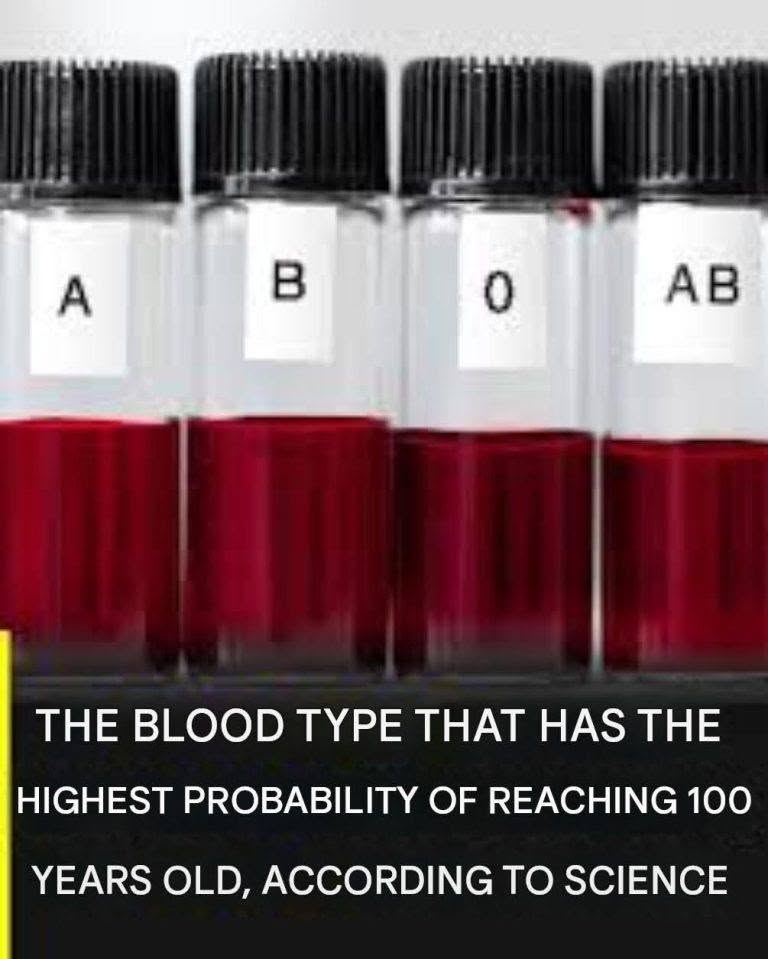
🩸 People With This Blood Type May Be More Likely to Reach 100—But There’s a Catch
Could your blood type have anything to do with how long you live?
It’s an intriguing question—and researchers have found some associations between ABO blood groups and certain health conditions. But there is an important distinction:
No blood type guarantees a longer life, and there is no proven “blood type of longevity.”
Still, one blood group has attracted attention in research on aging.
🩸 Blood Type O Has Been Studied for Possible Longevity Links
Some studies have found that people with type O blood tend to have lower risks of certain cardiovascular and clotting-related conditions than people with non-O blood types.
This may be related to differences in levels of certain blood-clotting proteins, including von Willebrand factor and factor VIII.
Because cardiovascular disease is an important cause of illness and death worldwide, researchers have investigated whether these differences might also be associated with longevity.
But that doesn’t mean type O automatically leads to a longer life.
🔬 What About People Who Live to 100?
Studies of centenarians have produced interesting observations about blood groups, but the findings aren’t consistent enough to conclude that one ABO blood type is responsible for exceptional longevity.
People who reach 100 are influenced by a huge combination of factors, including:
- Genetics
- Diet and overall nutrition
- Physical activity
- Smoking and alcohol habits
- Blood pressure and cholesterol
- Access to healthcare
- Social connections
- Environment
- Chance and other biological factors
Blood type is only one small biological characteristic—and probably not one of the most important factors determining how long someone lives.
❤️ The Bigger Picture Matters Much More
If you have type O blood, there’s no need to assume you’re destined to live longer.
And if you have type A, B, or AB blood, there’s certainly no reason to worry that you’re destined to live less.
Your everyday habits have a much stronger practical role in protecting your health.
Eating a varied diet rich in vegetables, fruits, whole grains, legumes, and other minimally processed foods, staying physically active, avoiding tobacco, getting adequate sleep, maintaining a healthy weight, and keeping conditions such as high blood pressure under control can all contribute to healthy aging.
🧬 So, Is Type O the “100-Year-Old Blood Type”?
Not exactly.
Research has found associations between blood type and certain health risks, and type O has sometimes been associated with lower risks of particular cardiovascular and clotting problems.
But scientists have not established that type O blood causes people to live to 100.
Think of blood type as one small piece of a very complicated puzzle.
Your genes may influence your starting point—but your long-term health is shaped by many things you can influence every day.
🌿 The Takeaway
If you’re hoping to reach 100, don’t worry about changing your blood type.
Focus instead on the things that actually support healthy aging:
Move regularly. Eat well. Don’t smoke. Sleep enough. Stay socially connected. Get recommended health screenings. And work with your healthcare professional to manage important risk factors.
🩸 Your blood type may be interesting—but it doesn’t determine your destiny.