My name is Rebecca.
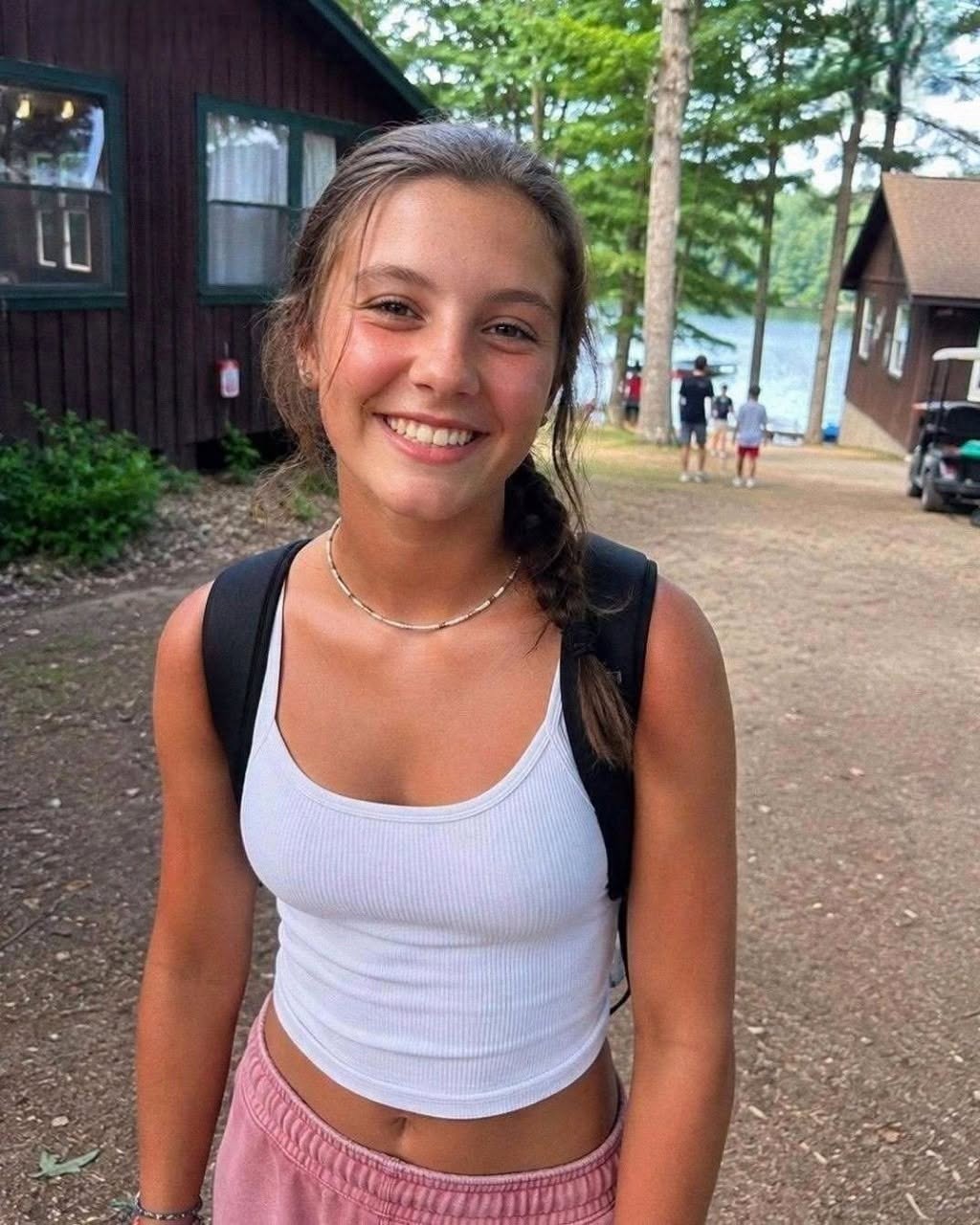
My daughter, Mia, is thirteen, and for three years she’d dreamed of going to summer camp.
She’d found one online when she was ten and never stopped talking about it.
Swimming in the lake.
Horseback riding.
Sleeping in a cabin with girls her age.
Making friendship bracelets around a campfire.
Every summer, she’d ask the same question.
“Mom, do you think I could go next year?”
I couldn’t afford it when she was ten.
Or eleven.
Or twelve.
So when I finally had enough money saved, I surprised her.
She screamed.
Actually screamed.
Then she hugged me so tightly I could barely breathe.
For three weeks, Mia lived her dream.
At least, that’s what I thought.
Every few days, I received photographs from the camp.
Mia riding a horse.
Mia swimming.
Mia sitting around a campfire.
She looked happier than I’d seen her in years.
Then, on the final day, I drove three hours to pick her up.
I was already imagining her talking nonstop about everything she’d done.
Instead, when I arrived, the camp director asked me to step into his office.
His expression was cold.
“Mrs. Carter, we need to talk about your daughter.”
I immediately became nervous.
“Is Mia okay?”
“She is.”
“Did something happen?”
He folded his arms.
“After what your daughter did here, I don’t want kids like her coming to this camp again.”
I stared at him.
“I’m sorry?”
He sighed.
“Your daughter caused serious problems.”
“What kind of problems?”
“She encouraged other campers to break rules.”
My heart sank.
“Mia?”
“She organized them.”
I couldn’t believe it.
The director continued.
“She convinced several girls to leave their cabins after lights-out. She interfered with staff. She challenged counselors publicly. And then she encouraged other children to refuse an activity.”
I felt embarrassed.
“I had no idea.”
“Clearly.”
I looked through the office window.
Mia was standing beside the pickup area with her backpack.
Her head was down.
She wasn’t laughing.
She wasn’t talking to her friends.
She looked terrified.
I turned back to the director.
“Can I talk to her?”
He hesitated.
Then nodded.
I walked outside.
“Mia?”
She looked at me.
The moment she saw my face, tears filled her eyes.
“Mom…”
“What happened?”
She shook her head.
“I can’t tell you here.”
The director appeared behind me.
“She knows what she did.”
Mia looked at him.
Then she whispered:
“No, I don’t think you want Mom to know what you did.”
The director’s face changed.
Only for a second.
But I noticed.
“What does that mean?” I asked.
“Nothing,” he snapped.
Mia grabbed my hand.
“Mom, please. Let’s go.”
I didn’t argue.
We got into the car.
For nearly twenty minutes, Mia didn’t say a word.
Then she started crying.
Not the quiet kind of crying.
She completely broke down.
I pulled over.
“Mia, look at me.”
She wiped her face.
“Did someone hurt you?”
“No.”
“Did a counselor hurt you?”
She hesitated.
Then nodded.
My heart stopped.
“Who?”
“Mr. Dalton.”
The camp’s senior counselor.
“What did he do?”
Mia looked out the window.
“He was hurting one of the girls.”
“What do you mean?”
“He wasn’t hitting her.”
She took a shaky breath.
“He was stealing her medication.”
I stared at her.
Mia explained that one of the girls in her cabin had a medical condition requiring medication at specific times.
One night, the girl couldn’t find it.
She panicked.
Mia helped her search.
They discovered that the counselor had been keeping the medication in his office.
Mia confronted him.
He denied it.
So Mia started asking questions.
She discovered that other campers had complained about missing belongings.
Phones.
Money.
Medication.
Small valuables.
And every complaint had been dismissed as “children losing things.”
Mia didn’t believe it.
So she did something the director considered unforgivable.
She organized the girls.
They compared what had gone missing.
They wrote down dates.
They collected screenshots.
And they secretly photographed the counselor’s storage cabinet.
Mia sent the evidence to her mother.
Except she hadn’t sent it to me.
She had sent it to someone else.
“Who?” I asked.
She reached into her backpack.
“His wife.”
I stared at her.
“What?”
“She owns the camp.”
I felt a chill.
Mia had discovered that the director wasn’t the owner.
His wife was.
And according to the girls, every complaint about the counselor had been buried.
The director hadn’t been angry because Mia broke camp rules.
He was angry because she’d discovered what he had been hiding.
But there was something else.
Mia handed me her phone.
On it was a recording.
The director was speaking to the counselor.
I listened.
My blood ran cold.
“He’s thirteen,” the director said.
“Who?”
“The boy who saw you take the medication.”
There was a pause.
Then the counselor replied:
“What are you going to do?”
The director answered:
“Nothing. His parents already believe he’s lying.”
I stopped the recording.
“Mia…”
She nodded.
“There were more recordings.”
“How did you get these?”
She looked at me.
“I didn’t.”
“What?”
“Someone else did.”
She opened another message.
It was from a number I’d never seen.
The message contained a single sentence:
“Your daughter saved my son.”
Below it was a photograph.
A young boy.
The same boy Mia had mentioned.
And beneath the photograph was a police badge.
The sender was an investigator.
The investigation had already begun.
Mia hadn’t been the troublemaker.
She had been the whistleblower.
The next morning, police arrived at the camp.
The counselor was taken away.
The director was questioned.
And several parents arrived after receiving calls from investigators.
By the end of the day, more than a dozen families had reported incidents they had previously been afraid to discuss.
The camp was temporarily shut down.
Weeks later, I received a letter from the investigation team.
It said Mia’s actions had helped uncover a pattern of misconduct that might otherwise have continued.
I kept that letter.
But the most important moment came much later.
Mia and I were sitting at the kitchen table.
She looked exhausted.
“I ruined camp,” she whispered.
“No.”
“I got everyone in trouble.”
“No, sweetheart.”
“I was supposed to have the best summer of my life.”
I reached across the table and took her hand.
“You did something more important.”
She looked at me.
“You protected people who were afraid to speak.”
She started crying.
Then she asked the question that broke my heart.
“Are you proud of me?”
I hugged her.
“More than you’ll ever know.”
She never went back to that camp.
But she didn’t stop dreaming about summer camp.
The following year, she found another one.
This time, before she left, she looked at me and smiled.
“Mom?”
“Yes?”
“I promise I’ll try to stay out of trouble.”
I laughed.
“I’ll believe that when I see it.”
She hugged me.
Then whispered:
“But if I see someone being hurt…”
I knew exactly what she meant.
“Do what you think is right.”
Because sometimes the child adults call “difficult” is simply the child brave enough to ask the question everyone else is afraid to ask.
And sometimes the person standing in the doorway telling you that your child doesn’t belong…
is terrified that you’ll discover why she spoke up.