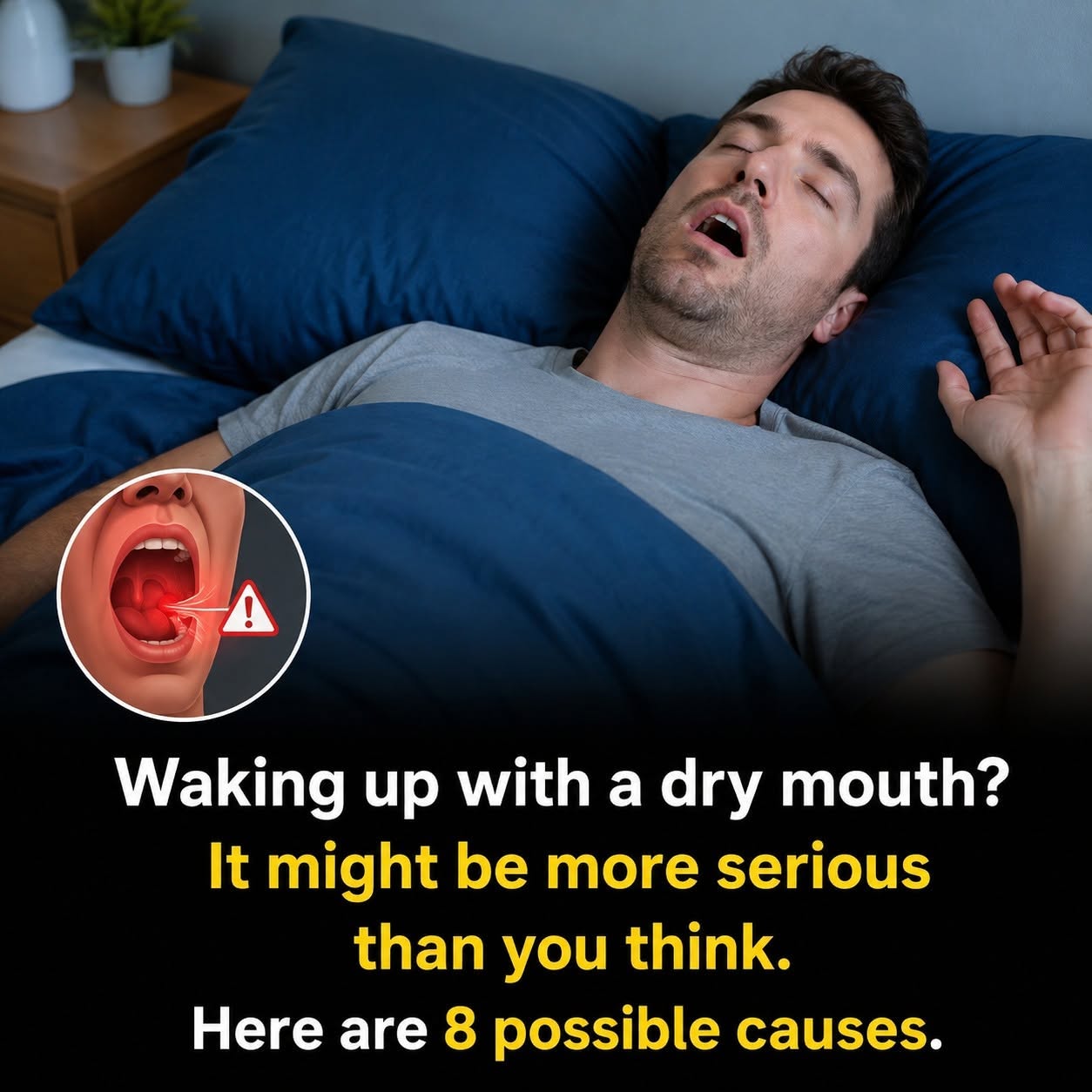
Dry Mouth at Night: 8 Warning Signs You Shouldn’t Ignore
Waking up with a dry, sticky mouth is something many people experience.
Sometimes the explanation is simple—you slept with your mouth open, the room was dry, or you didn’t drink enough fluids during the day.
But persistent dry mouth, especially when it happens night after night, can sometimes be a clue that something else needs attention.
Dry mouth, medically known as xerostomia, occurs when your mouth doesn’t produce enough saliva. Saliva protects your teeth, helps with swallowing and digestion, and keeps the tissues inside your mouth comfortable.
Here are eight signs that shouldn’t be ignored.
1. You Wake Up Extremely Thirsty Every Night
Occasional thirst is normal.
But constantly waking up with an unusually dry mouth and intense thirst may warrant investigation.
Certain medications, dehydration, high blood sugar, and other conditions can contribute to excessive thirst.
If you’re also urinating much more frequently than usual, particularly at night, speak with a healthcare professional.
2. You Snore or Sleep With Your Mouth Open
Mouth breathing is one of the most common reasons people wake up with a dry mouth.
Nasal congestion, allergies, structural nasal problems, and sleep-disordered breathing can all contribute.
If you snore loudly, frequently wake up gasping or choking, or feel excessively sleepy during the day, ask a healthcare professional about possible sleep apnea.
3. Your Mouth Feels Sticky During the Day
If the dryness doesn’t disappear after you get out of bed, it may be more than simply sleeping with your mouth open.
Persistent dry mouth can occur as a side effect of medications or because of certain medical conditions.
A dentist or doctor can help determine the cause.
4. You Have Difficulty Swallowing or Speaking
Saliva helps keep the mouth and throat lubricated.
When saliva production is reduced, swallowing dry foods or speaking for long periods can become uncomfortable.
Persistent difficulty swallowing should be medically evaluated rather than automatically blamed on dry mouth.
5. You Develop Frequent Cavities
This is one reason chronic dry mouth deserves attention.
Saliva helps protect teeth from acids produced by bacteria.
When saliva production falls, the risk of tooth decay and other oral problems can increase.
If you’re suddenly developing more cavities despite maintaining your normal oral-hygiene routine, tell your dentist that you’ve been experiencing dry mouth.
6. Your Breath Has Become Persistently Unpleasant
Dry mouth can contribute to bad breath because saliva normally helps wash away food particles and bacteria.
Occasional morning breath is completely normal.
But persistent bad breath—especially when accompanied by gum bleeding, tooth pain, or mouth sores—deserves a dental checkup.
7. You Notice Burning, Sores, or Changes Inside Your Mouth
Chronic dryness can make the tissues inside your mouth uncomfortable.
You may notice burning, irritation, cracked lips, mouth sores, or changes in taste.
A persistent sore or unusual patch should be examined by a dentist or healthcare professional.
8. Dry Mouth Started After a New Medication
This is surprisingly common.
Many medications can reduce saliva production, including some used for allergies, depression, high blood pressure, pain, and other conditions.
Don’t stop a prescribed medication on your own.
Instead, tell your doctor or pharmacist about the dryness. They can determine whether the medication could be contributing and whether an alternative or adjustment is appropriate.
🌙 What Can You Do Tonight?
If you occasionally wake up with a dry mouth, some simple measures may help:
- Drink enough water throughout the day.
- Keep water beside your bed.
- Treat nasal congestion appropriately.
- Avoid smoking.
- Limit excessive alcohol.
- Consider a humidifier if your bedroom air is very dry.
- Maintain good brushing and flossing habits.
- Ask your dentist about products designed for dry mouth.
Sugar-free gum or lozenges can sometimes stimulate saliva production, provided they’re safe for you to use.
🚨 When Should You Seek Medical Advice?
Make an appointment if dry mouth:
- Happens regularly
- Is getting worse
- Causes difficulty eating or swallowing
- Is accompanied by frequent cavities
- Comes with persistent mouth sores
- Occurs alongside excessive thirst and frequent urination
- Began after starting a medication
- Is accompanied by loud snoring, gasping, or severe daytime sleepiness
And remember: dry mouth itself isn’t a diagnosis.
Finding the underlying cause is what matters.
The Bottom Line
Waking up with a dry mouth once in a while is usually not a reason to panic.
But if you regularly wake up feeling as though you’ve spent the night in a desert, your body may be giving you a clue worth investigating.
Don’t just keep reaching for a glass of water every night without asking why it’s happening.
Sometimes the cause is simple.
Sometimes it’s a medication.
And sometimes persistent dry mouth can be a sign of a condition that deserves treatment.
📌 Save this article and share it with someone who constantly wakes up with a dry mouth.
This article is for general education and isn’t a substitute for professional medical or dental advice.