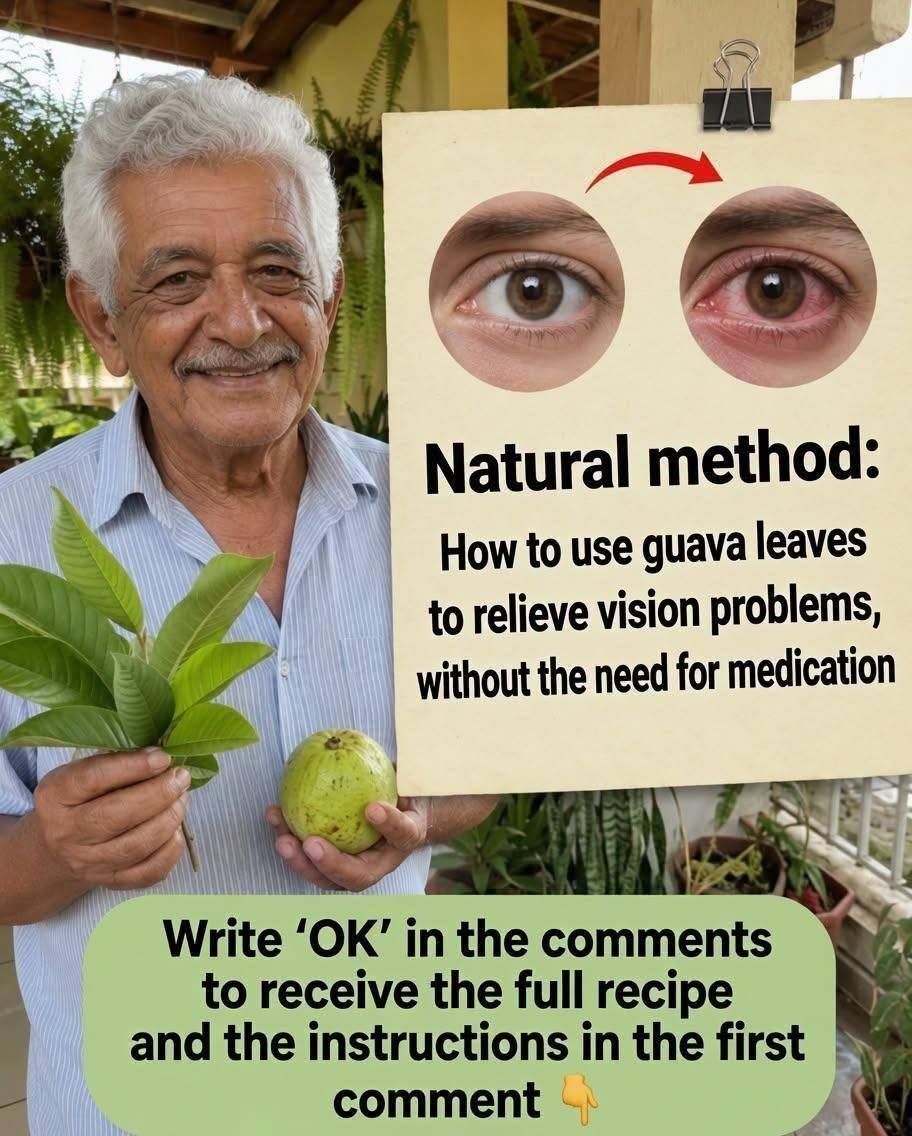
Can Guava Leaves Really Improve Your Eyesight? What You Should Know Before Trying This Remedy
Guava leaves have been used in traditional remedies for generations, and today they are sometimes promoted online as a natural treatment for tired eyes, poor vision, and other eye problems.
But there’s an important distinction between a traditional remedy and a medically proven treatment.
There is currently no good clinical evidence showing that placing guava leaves on the eyes, washing the eyes with guava-leaf water, or drinking guava-leaf preparations can restore lost eyesight or correct common vision problems such as nearsightedness, farsightedness, cataracts, or glaucoma.
Why are guava leaves associated with eye health?
Guava leaves contain various plant compounds, including antioxidants. Antioxidants are substances that can help protect cells from oxidative stress.
That has led to interest in guava leaves and other plant-based foods as part of a healthy diet.
But having antioxidant compounds does not automatically mean that a plant can improve eyesight or treat an eye disease.
Be careful about putting guava leaves or homemade liquid in your eyes
This is especially important.
The surface of the eye is delicate, and homemade preparations are not sterile. Applying crushed leaves, extracts, teas, or other unsterilized substances directly to the eye could introduce bacteria or other contaminants and potentially cause irritation or infection.
A natural product isn’t automatically safe simply because it comes from a plant.
What about tired eyes after using a phone or computer?
Eye strain is common after prolonged screen use.
Instead of relying on guava leaves, simple measures can be more useful:
- Take regular breaks from screens.
- Follow the 20-20-20 rule: every 20 minutes, look at something about 20 feet away for at least 20 seconds.
- Blink frequently, especially when concentrating on a screen.
- Adjust screen brightness and reduce glare.
- Keep the screen at a comfortable distance.
- Get enough sleep.
- If your eyes feel persistently dry or irritated, ask an eye-care professional whether lubricating eye drops are appropriate.
When should you see an eye doctor?
Don’t try to treat unexplained vision changes with a home remedy.
Seek prompt medical attention if you experience sudden vision loss, severe eye pain, a sudden increase in floaters or flashes, a curtain-like shadow over your vision, significant redness with pain, or an eye injury.
These symptoms can sometimes indicate an emergency.
The bottom line
Guava leaves may have interesting nutritional and traditional uses, but claims that they can restore eyesight, cure eye diseases, or eliminate age-related vision problems aren’t supported by strong clinical evidence.
If you enjoy guava as part of a balanced diet, that’s one thing.
Putting homemade guava-leaf preparations directly into your eyes is another—and it isn’t worth risking an eye infection in an attempt to improve your vision.
When it comes to your eyesight, a simple rule is worth remembering:
Natural doesn’t always mean proven, and it doesn’t always mean safe.