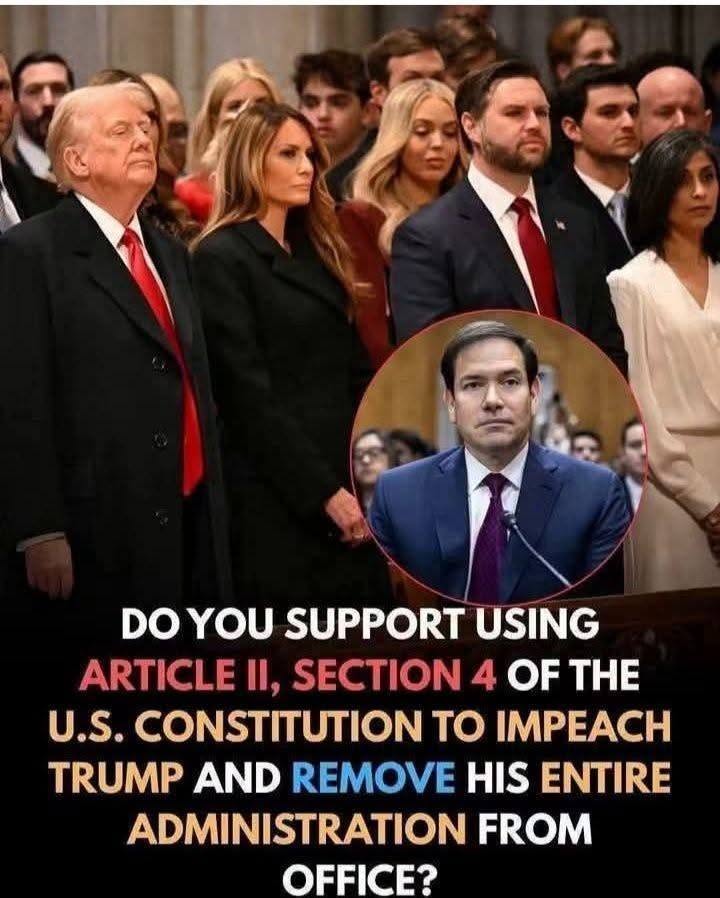
Can a U.S. President Be Removed Under Article II, Section 4?
The U.S. Constitution provides a specific mechanism for removing a president from office when serious misconduct is alleged. Article II, Section 4 states that the president, vice president, and other federal civil officers can be removed after impeachment and conviction for treason, bribery, or other “high Crimes and Misdemeanors.” (Congress.gov)
⚖️ How Does the Process Work?
Removal isn’t automatic simply because someone calls for impeachment.
1. The House of Representatives impeaches
The House has the sole constitutional power to impeach. Impeachment functions much like a formal accusation. (Congress.gov)
2. The Senate holds a trial
The Senate has the responsibility to conduct the impeachment trial. (Congress.gov)
3. The Senate must convict
A conviction requires the constitutionally required supermajority. If convicted, the president can be removed from office. The Senate may also vote to disqualify the person from holding federal office in the future. (Congress.gov)
📜 What Does “High Crimes and Misdemeanors” Mean?
The phrase doesn’t simply mean any ordinary criminal offense. Historically and constitutionally, it has been understood as covering serious misconduct that threatens governmental institutions or abuses public trust. Exactly what qualifies has been debated throughout American history. (Congress.gov)
🏛️ Is Article II, Section 4 the Same as the 25th Amendment?
No. They’re separate constitutional mechanisms.
Article II, Section 4 concerns removal through impeachment and conviction for serious misconduct.
The 25th Amendment, by contrast, addresses presidential succession and situations in which a president is unable to perform the duties of the office.
🔎 The Bottom Line
Yes, a U.S. president can be removed under Article II, Section 4, but only through the constitutional impeachment process. A House impeachment by itself does not remove a president; removal requires Senate conviction. (Congress.gov)
For the authoritative text and explanation, see the Constitution Annotated from Congress.gov.