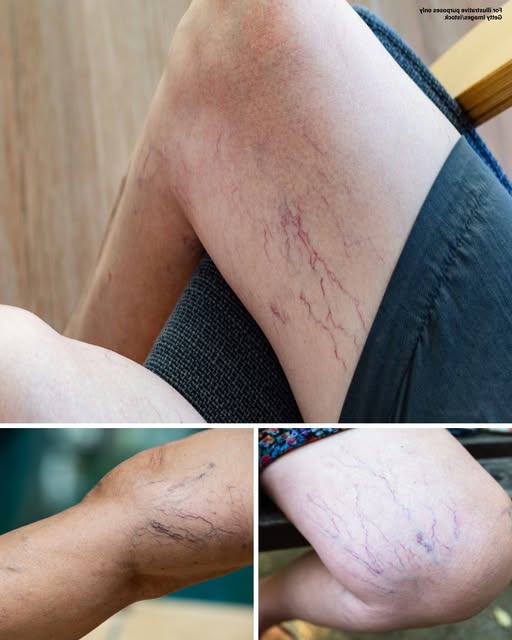
💜 If You Have Purple Veins on Your Legs, It Could Mean This…
Have you noticed purple or bluish veins appearing on your legs? 💜 You might wonder whether they are simply a normal part of your skin or a sign of an underlying health issue.
The truth is that purple veins can have several causes, and their appearance alone does not tell you whether something is wrong. Some are harmless, while others may need medical attention.
🦵 1. Visible Veins Can Be Completely Normal
Veins may appear purple or blue because of the way light passes through the skin. They can be easier to see in people with lighter or thinner skin, lower body fat, or a family tendency toward visible veins.
If the veins have always looked this way and you have no pain or swelling, they may simply be a normal feature of your body.
🩸 2. They Could Be Spider Veins
Spider veins are small, thin red, blue, or purple veins that form web-like patterns close to the skin’s surface.
They commonly appear on the thighs, calves, and ankles. They are usually harmless, although some people experience aching, burning, or discomfort.
⚠️ 3. They May Be Varicose Veins
If your veins are enlarged, twisted, or bulging, they could be varicose veins. These develop when the valves inside the veins do not work efficiently, allowing blood to pool.
Possible symptoms include:
- Heavy or tired legs, especially after standing.
- Aching, throbbing, or itching around the veins.
- Swelling in the ankles or lower legs.
- Skin discoloration around the ankles.
Varicose veins are common, but persistent discomfort or skin changes should be assessed by a healthcare professional.
🪑 4. Lifestyle and Other Factors Can Play a Role
Visible or enlarged leg veins may be associated with genetics, aging, pregnancy, hormonal changes, prolonged standing or sitting, and previous blood clots.
Gentle walking, regular movement, and elevating your legs when resting may help ease symptoms associated with venous problems. These measures will not necessarily remove visible veins.
🚨 5. When Should You Seek Medical Help?
Seek urgent medical assessment if one leg suddenly becomes swollen, painful, warm, or discolored, as these can be signs of a blood clot.
Call emergency services immediately if leg symptoms occur with sudden shortness of breath, chest pain, coughing up blood, or fainting.
A vein that becomes hard, red, or tender also deserves prompt medical evaluation.
💜 Final Thoughts
Purple veins on your legs do not automatically mean you have poor circulation or a serious disease. They may be normal visible veins, spider veins, or varicose veins.
The key is to notice whether they are new, changing, painful, or accompanied by swelling. A healthcare professional can examine them and determine whether treatment is needed.
Health note: This article is for general information and is not a substitute for medical advice.