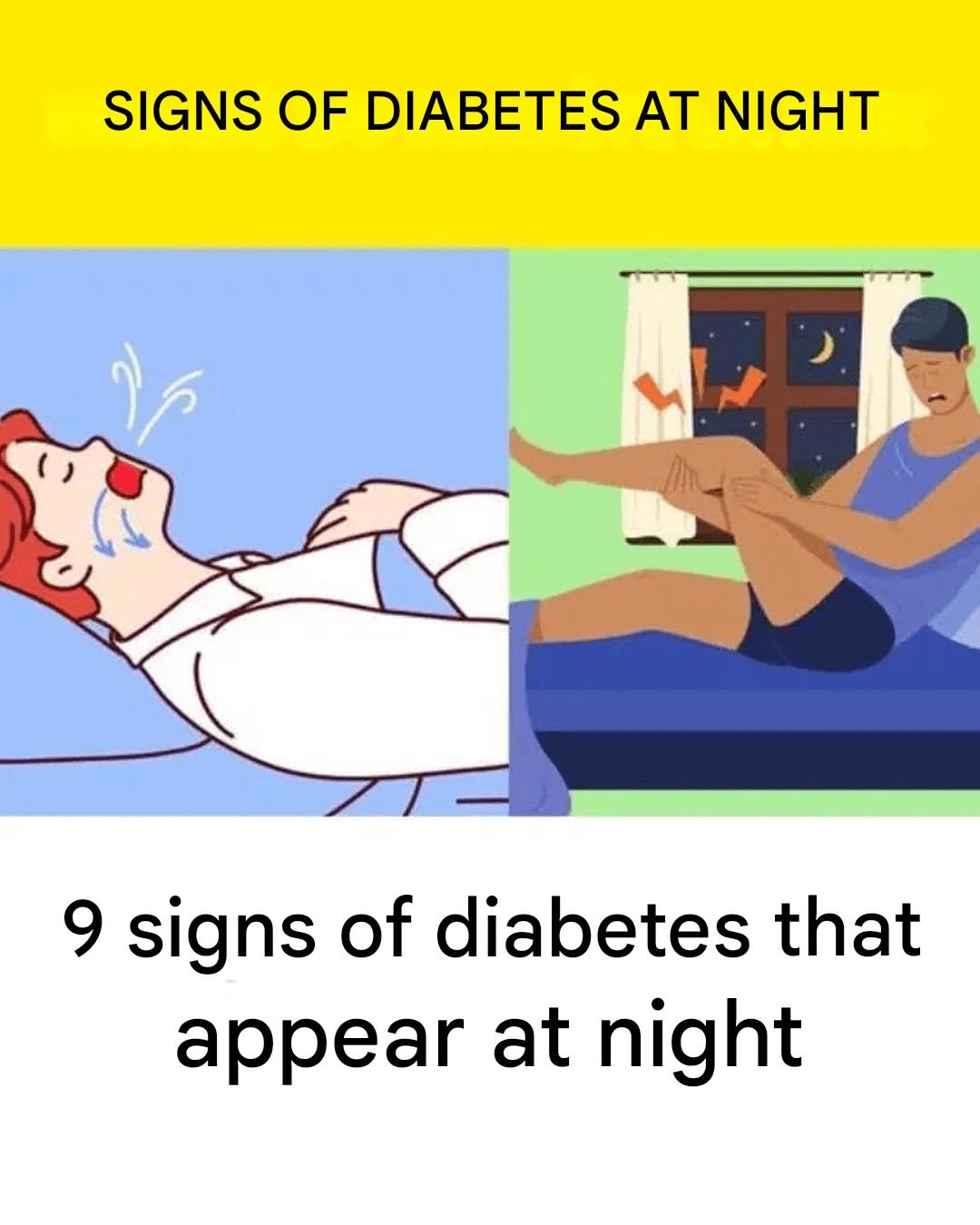
9 Signs of Diabetes That May Appear at Night
Diabetes doesn’t always announce itself with obvious symptoms. Sometimes changes in blood sugar can show up as nighttime thirst, frequent trips to the bathroom, sweating, or difficulty sleeping.
These symptoms don’t prove that someone has diabetes, but if they happen repeatedly, they’re worth discussing with a healthcare professional.
1. Waking up frequently to urinate
Needing to urinate several times during the night, especially when this is a new change, can occur when blood glucose is high. The kidneys may try to remove excess glucose through urine, increasing urine production.
2. Extreme thirst at night
If you regularly wake up with a very dry mouth or an unusually strong thirst, it may be related to dehydration caused by increased urination.
Persistent nighttime thirst can have many other causes, however, including medications, a dry environment, or other medical conditions.
3. Night sweats or sudden sweating
Sweating during sleep can occur when blood glucose becomes too low, particularly in people taking insulin or certain diabetes medications.
Night sweats have many possible causes, so they shouldn’t automatically be attributed to diabetes.
4. Shaking or a racing heartbeat
Low blood sugar (hypoglycemia) can cause trembling, sweating, hunger, anxiety, or a rapid heartbeat.
If you’re taking diabetes medication and repeatedly experience these symptoms overnight, contact your healthcare professional.
5. Restless or disrupted sleep
Blood-sugar fluctuations, thirst, frequent urination, or other diabetes-related symptoms can make it difficult to stay asleep.
Poor sleep itself can also affect blood-sugar regulation, creating a frustrating cycle.
6. Headaches when you wake up
Some people experiencing overnight blood-glucose fluctuations may wake with a headache.
But morning headaches are much more commonly associated with other issues, including dehydration, sleep apnea, alcohol use, medication effects, or insufficient sleep.
7. Feeling unusually hungry
Strong hunger during the night or early morning can sometimes occur when blood glucose is poorly controlled.
Diabetes can prevent glucose from being used effectively by the body’s cells, potentially contributing to increased hunger.
8. Itching or dry skin
High blood glucose can contribute to dehydration and dry skin. Some people with diabetes may also experience recurrent skin problems or infections.
Persistent itching, however, has many possible causes and shouldn’t be used by itself to diagnose diabetes.
9. Tingling or burning in the feet
Numbness, tingling, or burning sensations in the feet can occur with diabetic peripheral neuropathy, a type of nerve damage associated with prolonged high blood sugar.
These symptoms may become more noticeable at night when there are fewer distractions.
🩺 When should you get checked?
If you repeatedly experience several of these symptoms—particularly excessive thirst, frequent urination, unexplained weight loss, unusual fatigue, blurred vision, or recurrent infections—talk with a healthcare professional.
A simple blood test can help determine whether your blood glucose is in the normal range.
And if you already have diabetes, frequent nighttime sweating, confusion, shaking, or other symptoms of possible low blood sugar should be discussed with your healthcare team.
The important takeaway
One nighttime symptom doesn’t mean you have diabetes.
But a persistent pattern shouldn’t be ignored.
Diabetes can often be detected with routine blood testing, and early diagnosis gives people an opportunity to manage blood sugar and reduce the risk of complications.
If you experience severe confusion, loss of consciousness, seizures, or other serious symptoms, seek emergency medical care immediately.