9 Foot Symptoms You Should Never Ignore: What They Could Mean
Your feet can reveal more about your health than you might think.
They carry you through every step of the day, but changes in your feet are sometimes easy to dismiss as “just getting older,” wearing uncomfortable shoes, or being tired.
Some symptoms are harmless. Others, however, may be early clues that something needs medical attention.
Here are 9 foot symptoms you shouldn’t simply ignore—and what they could potentially mean.
1. Persistent swelling
Swollen feet or ankles after standing for a long time can be relatively common. But swelling that is persistent, worsening, or accompanied by shortness of breath may need prompt medical evaluation.
Possible causes include prolonged standing, certain medications, vein problems, kidney or heart conditions, and other health issues.
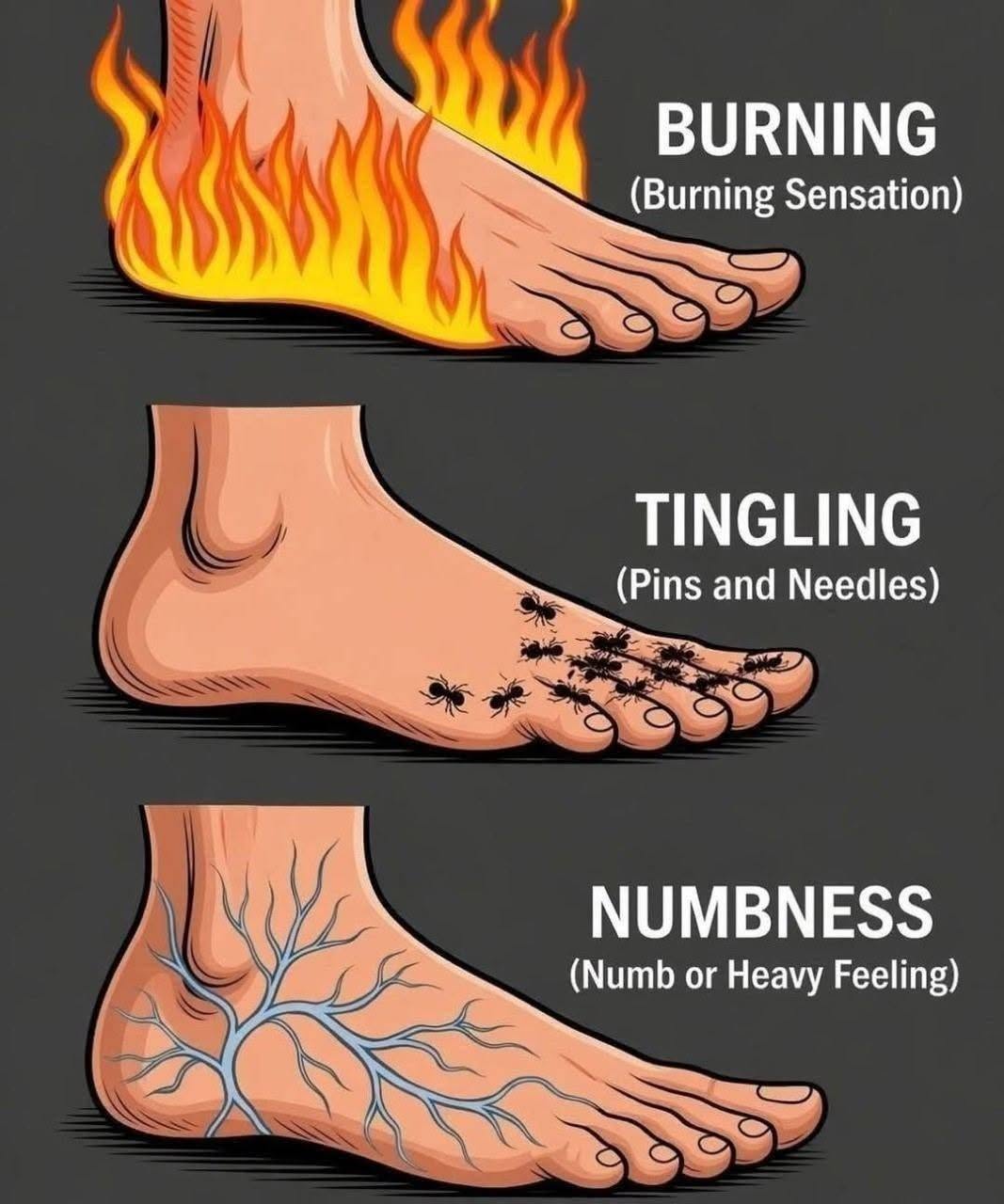
2. Burning or tingling
A persistent burning, pins-and-needles sensation, or numbness in the feet can sometimes indicate nerve irritation or damage.
Diabetes is one important cause of peripheral neuropathy, but vitamin deficiencies, alcohol use, certain medications, and other conditions can also affect nerves.
If the sensation keeps returning or gradually worsens, talk with a healthcare professional.
3. A wound that won’t heal
A small cut or blister that refuses to heal deserves attention—especially in people with diabetes or circulation problems.
Reduced sensation can make an injury difficult to notice, while poor blood flow can interfere with healing.
Don’t ignore a foot wound that becomes increasingly painful, swollen, red, warm, or produces drainage.
4. Sudden, severe foot pain
A sudden episode of intense foot pain can have many causes, including an injury, gout, infection, or inflammation.
If severe pain appears without an obvious reason—or comes with swelling, redness, fever, or inability to put weight on the foot—seek medical advice promptly.
5. Cold feet that stay cold
Feet can naturally feel cold in chilly weather.
But if your feet frequently remain unusually cold, particularly when accompanied by numbness, pain, skin-color changes, or sores, circulation or nerve problems may be involved.
A healthcare professional can help determine the cause.
6. Changes in skin color
Pay attention if your toes or feet suddenly become unusually pale, blue, purple, or dark.
Color changes can sometimes be related to circulation problems, bruising, infection, or other conditions.
A sudden change accompanied by severe pain, numbness, weakness, or a cold limb requires urgent medical attention.
7. Persistent itching, peeling, or cracking
Itchy, peeling, or cracked skin—especially between the toes—is commonly associated with athlete’s foot, a fungal infection.
However, persistent or worsening skin changes may have other causes, including eczema, psoriasis, or bacterial infection.
Keeping feet clean and dry can help, but persistent symptoms should be evaluated.
8. Changes in your toenails
Thickened, brittle, discolored, distorted, or unusually shaped toenails may result from fungal infections, repeated trauma, or other conditions.
A dark streak under a toenail should also be checked, particularly if it appears without an obvious injury or changes over time.
9. Loss of sensation
Not being able to properly feel your feet can be dangerous.
Reduced sensation increases the risk of unnoticed cuts, burns, blisters, and pressure injuries.
Peripheral neuropathy—often associated with diabetes—is one possible cause, but numbness can have several explanations.
If you notice persistent or progressive loss of sensation, arrange a medical evaluation.
When should you seek urgent help?
Don’t wait for a routine appointment if you develop sudden severe foot pain, a rapidly changing foot color, significant swelling, a spreading infection, a cold or numb limb, or a serious wound.
People with diabetes should be especially careful with new foot wounds, infections, or changes in sensation because complications can progress without obvious symptoms.
The bottom line
Your feet aren’t just there to carry you around—they can sometimes provide important clues about your overall health.
A symptom doesn’t automatically mean something serious is wrong. But persistent, sudden, worsening, or unexplained changes deserve attention rather than being ignored.
If something about your feet doesn’t look or feel right, getting it checked early is usually better than waiting for it to become a bigger problem.
Important: This article is for general educational purposes and isn’t a diagnosis. Foot symptoms can have many different causes. If you’re concerned about a new, severe, or persistent symptom, speak with a qualified healthcare professional.