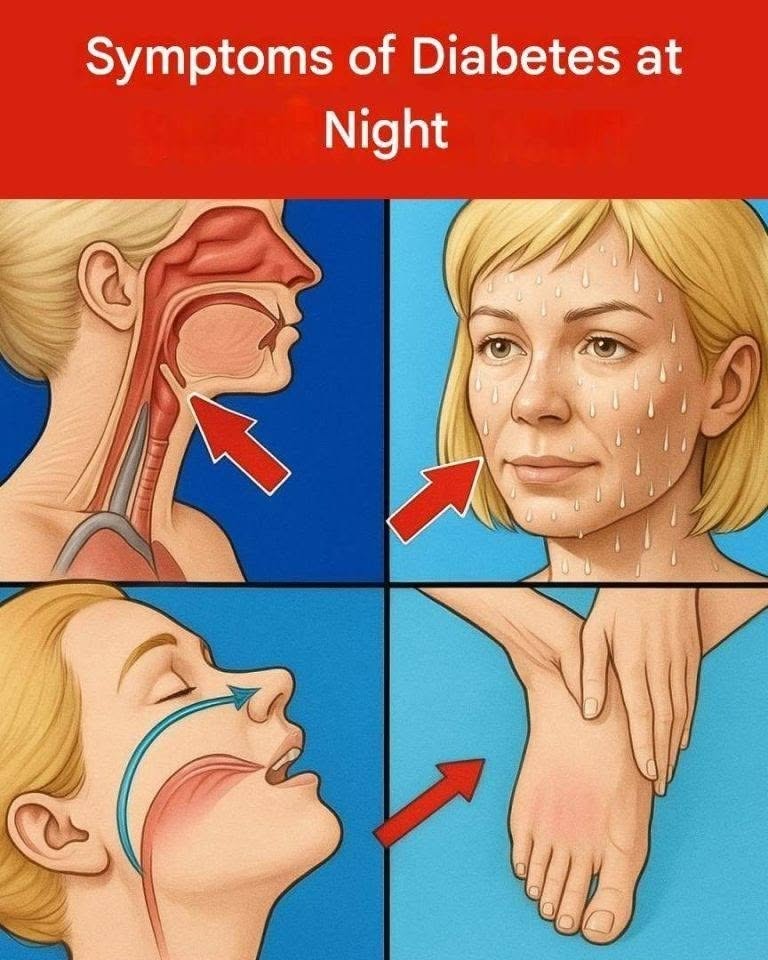
5 Diabetes Symptoms That Appear at Night
Diabetes can develop gradually, and some of its warning signs may become especially noticeable after dark. While waking up with certain symptoms doesn’t automatically mean you have diabetes, recurring nighttime changes are worth paying attention to.
Here are 5 symptoms that can sometimes occur at night when blood sugar is too high or too low.
1. Waking Up Frequently to Urinate
One of the better-known symptoms of diabetes is frequent urination.
When blood glucose remains elevated, the kidneys may work harder to remove excess glucose through urine. This can increase urine production and cause you to wake up repeatedly during the night.
If you’re regularly getting up several times to use the bathroom without an obvious reason, it’s worth discussing with a healthcare professional.
2. Excessive Thirst at Night
Frequent urination can contribute to dehydration, which may leave you unusually thirsty.
You might wake up with a dry mouth or feel the need to drink water repeatedly throughout the night.
Occasional nighttime thirst is normal, but persistent excessive thirst—especially when combined with frequent urination—can be a reason to have your blood glucose checked.
3. Night Sweats
Sweating during sleep can have many causes, including a warm bedroom, medications, hormonal changes, infections, and anxiety.
However, low blood sugar (hypoglycemia) can cause sweating, shaking, a rapid heartbeat, hunger, or confusion. This is particularly important for people taking insulin or certain diabetes medications.
Unexplained or recurring night sweats should not automatically be blamed on diabetes.
4. Restless Sleep or Waking Up Shaky
Blood sugar that becomes too low during the night may trigger symptoms such as trembling, sweating, a pounding heartbeat, hunger, irritability, or confusion.
Some people may wake suddenly without understanding why.
If you have diabetes and frequently wake up feeling shaky, sweaty, confused, or unusually hungry, check your glucose if you have a meter or continuous glucose monitor and discuss recurring episodes with your healthcare team.
5. Tingling, Burning, or Numb Feet
Persistently high blood sugar can damage nerves over time, a complication known as diabetic peripheral neuropathy.
Symptoms can include burning, tingling, numbness, or pain in the feet and legs. These sensations may become more noticeable when you’re lying quietly in bed.
Don’t ignore persistent numbness or burning in your feet, particularly if you also have other diabetes risk factors.
When Should You Get Checked?
Having one of these symptoms doesn’t mean you have diabetes. Many conditions can cause similar problems.
However, if several symptoms keep occurring—especially frequent nighttime urination, excessive thirst, unexplained weight loss, fatigue, blurred vision, or recurrent infections—consider talking with a healthcare professional about diabetes testing.
A simple blood glucose test or A1C test can help determine whether your blood sugar is in a healthy range.
One Important Reminder
Nighttime symptoms can provide clues, but they cannot diagnose diabetes on their own.
If you’re experiencing recurring symptoms, don’t rely on social-media checklists or home remedies. Getting appropriate testing is the safest way to find out what’s actually causing them.
Your body doesn’t always shout when something is wrong. Sometimes, it whispers in the middle of the night.