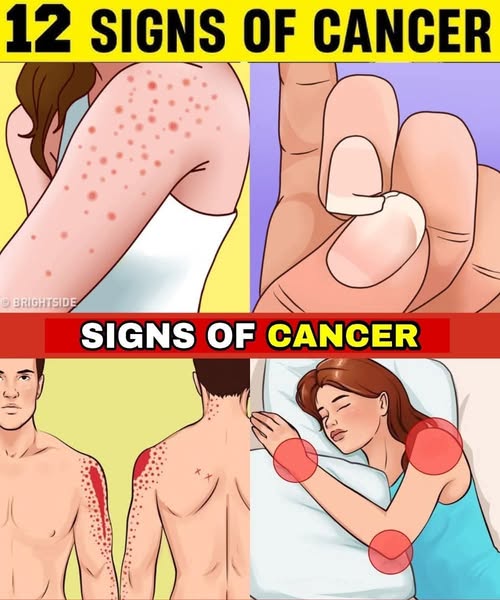
⚠️ 12 Early Warning Signs Your Body May Be Developing Cancer
Your body often gives you signals when something changes. While many symptoms are caused by common, non-cancerous conditions, certain persistent or unexplained changes deserve attention. ❤️
Recognizing potential warning signs and seeking medical advice when needed can help you get the right diagnosis and treatment as early as possible.
Important: There is no reliable way to tell whether your body is “developing cancer cells” based on symptoms alone. Many cancers cause no noticeable symptoms in their early stages, and these warning signs do not necessarily mean you have cancer.
🔎 1. Unexplained Weight Loss
Losing weight without changing your diet or physical activity may sometimes be associated with cancer. It can also result from thyroid problems, digestive conditions, stress, or other illnesses.
If you lose a significant amount of weight without trying, consult a healthcare professional.
😴 2. Persistent Fatigue
Feeling unusually tired despite adequate sleep can have many causes, including anemia, sleep disorders, infections, and thyroid problems. Some cancers can also cause persistent fatigue.
Pay attention if tiredness continues, worsens, or interferes with daily activities.
🌡️ 3. Recurrent Fever or Drenching Night Sweats
Repeated unexplained fever or night sweats can occasionally be associated with cancers such as lymphoma or leukemia. Infections and other medical conditions are much more common explanations.
Seek medical advice if these symptoms persist or occur alongside unexplained weight loss or swollen lymph nodes.
🔴 4. A New Lump or Unusual Swelling
A new lump in the breast, underarm, neck, or another part of the body may be caused by an infection, cyst, or enlarged lymph node. Some lumps, however, can indicate cancer.
Have a persistent, enlarging, or unexplained lump examined rather than trying to diagnose it yourself.
🩸 5. Unexplained Bleeding
Blood in your stool or urine, coughing up blood, or unusual vaginal bleeding should never be ignored. Causes range from infections and hemorrhoids to conditions that require urgent investigation.
Seek prompt medical care, especially for heavy bleeding or bleeding accompanied by weakness, dizziness, or severe pain.
🥣 6. Difficulty Swallowing
Persistent difficulty swallowing, a feeling that food is getting stuck, or painful swallowing can result from several conditions. Occasionally, these symptoms may be associated with cancers of the throat or esophagus.
Arrange a medical evaluation if swallowing problems persist or worsen.
🤢 7. Persistent Changes in Digestion
Ongoing bloating, abdominal discomfort, changes in bowel habits, or feeling full unusually quickly can have many explanations.
If symptoms are new, persistent, or accompanied by weight loss, bleeding, or appetite changes, speak with a healthcare professional.
🚽 8. Changes in Bowel or Bladder Habits
Persistent diarrhea, constipation, a change in stool shape, frequent urination, or difficulty passing urine may have various causes. Some bowel or urinary cancers can produce similar symptoms.
Seek assessment if the changes continue, particularly if you notice blood or unexplained pain.
🟤 9. Changes in Moles or Skin
A mole that changes in size, shape, or color—or a new skin growth that bleeds or fails to heal—should be checked.
For melanoma, remember the ABCDE guide:
- A — Asymmetry: One half differs from the other.
- B — Border: Edges are irregular or poorly defined.
- C — Color: Colors vary within the same spot.
- D — Diameter: Often larger than 6 mm, although melanomas can be smaller.
- E — Evolving: The spot changes over time.
Not every changing mole is cancerous, but an evolving spot deserves professional evaluation.
🗣️ 10. A Persistent Cough or Hoarse Voice
A cough that does not go away, persistent hoarseness, chest discomfort, or unexplained breathlessness can arise from infections, allergies, reflux, or lung and airway conditions.
Arrange medical assessment if symptoms persist, especially if you smoke, have a history of smoking, or cough up blood. Severe breathing difficulty requires emergency care.
🩹 11. A Wound That Does Not Heal
A sore that repeatedly bleeds, develops a crust, or does not heal may need evaluation, particularly if it appears on sun-exposed skin.
Persistent mouth ulcers or patches that do not resolve should also be examined by a dentist or healthcare professional.
🍽️ 12. Persistent Loss of Appetite or Feeling Full Quickly
Eating less because you feel full after only a small amount of food can occur with digestive problems, medication effects, and many other conditions. Sometimes, it may be associated with cancers involving the digestive system or ovaries.
If this is new and persistent, particularly alongside abdominal swelling, pain, or unexplained weight loss, seek medical advice.
🩺 What Should You Do If You Notice These Signs?
Do not panic—but do not ignore persistent changes.
- Make an appointment: Explain when the symptom began and whether it is getting worse.
- Describe other changes: Mention pain, weight changes, bleeding, or a lump if present.
- Ask about appropriate screening: Screening tests depend on your age, personal risk factors, family history, and local medical recommendations.
- Avoid self-diagnosis: Symptoms alone cannot confirm or rule out cancer, and unnecessary supplements or “detox” remedies can delay appropriate care.
Seek urgent medical attention for severe bleeding, significant breathing difficulty, sudden severe pain, or other rapidly worsening symptoms.
💚 Can Cancer Be Prevented?
Not every cancer can be prevented, but certain steps can reduce risk:
- Avoid tobacco and secondhand smoke.
- Limit alcohol.
- Maintain a balanced diet and regular physical activity.
- Protect your skin from excessive ultraviolet exposure.
- Follow recommended vaccinations, including HPV and hepatitis B vaccination when appropriate.
- Stay up to date with recommended cancer screening.
🌷 Final Thoughts
Your body’s changes are worth paying attention to, but having one or more of these symptoms does not mean you have cancer. Many have common, treatable explanations, and some cancers produce no early warning signs at all.
The most important step is to seek timely medical advice for symptoms that are persistent, unexplained, or worsening. Early evaluation can help identify the cause and ensure that appropriate care is not delayed.
Awareness is valuable. Fear is not a diagnosis—and getting checked is a positive step toward protecting your health. ❤️