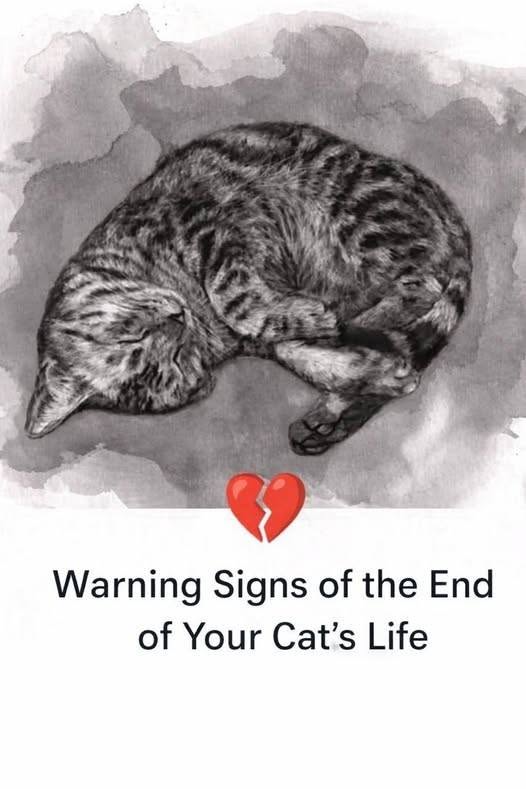
11 Signs Your Cat May Be Near the End of Life
Cats are remarkably good at hiding illness, which can make it difficult to recognize when something is seriously wrong. Some changes can occur when a cat is approaching the end of life, but these signs can also be caused by treatable medical conditions.
If your cat shows several of these changes, contact a veterinarian rather than assuming that your cat is dying.
1. Stops Eating or Drinking
A major reduction in food or water intake can occur in seriously ill cats. It can also signal pain, nausea, dental disease, kidney problems, or other conditions.
2. Extreme Weakness or Lack of Energy
A cat that spends almost all of its time sleeping, hiding, or lying in one place may be very unwell.
3. Difficulty Standing or Walking
Loss of coordination, weakness, or reluctance to move can indicate significant illness or pain.
4. Changes in Breathing
Very rapid, shallow, labored, or irregular breathing is concerning. Difficulty breathing is an emergency and requires immediate veterinary attention.
5. Hiding More Than Usual
Cats often hide when they’re frightened, in pain, or feeling sick. A sudden change in social behavior deserves attention.
6. Loss of Interest in Grooming
A sick cat may stop maintaining its coat, leaving the fur greasy, tangled, or matted.
7. Changes in Bathroom Habits
Loss of bladder or bowel control, difficulty urinating, or major changes in urine or stool can indicate illness.
8. Noticeable Weight Loss
Severe or ongoing weight loss can occur with chronic disease and should be evaluated by a veterinarian.
9. Changes in Behavior
A normally affectionate cat may become withdrawn, irritable, restless, or unusually quiet when it feels unwell.
10. Signs of Pain or Discomfort
Vocalizing, crouching, avoiding touch, repeatedly changing position, or showing unusual tension may indicate pain.
11. A Significant Decline in Overall Quality of Life
When a cat can no longer comfortably eat, drink, move, groom itself, interact, or enjoy activities it once loved, its quality of life may be seriously affected.
🚨 When to Seek Help Immediately
Don’t wait if your cat is struggling to breathe, collapses, cannot stand, has severe bleeding, is repeatedly vomiting, is unable to urinate, or appears to be in severe distress.
One Important Reminder
These signs do not automatically mean your cat is dying. Many serious-looking symptoms can have treatable causes, and cats often benefit from veterinary care even when they appear very sick.
If your cat is elderly or has a chronic illness, your veterinarian can help you assess pain, comfort, treatment options, and quality of life so you can make the kindest decision for your pet.