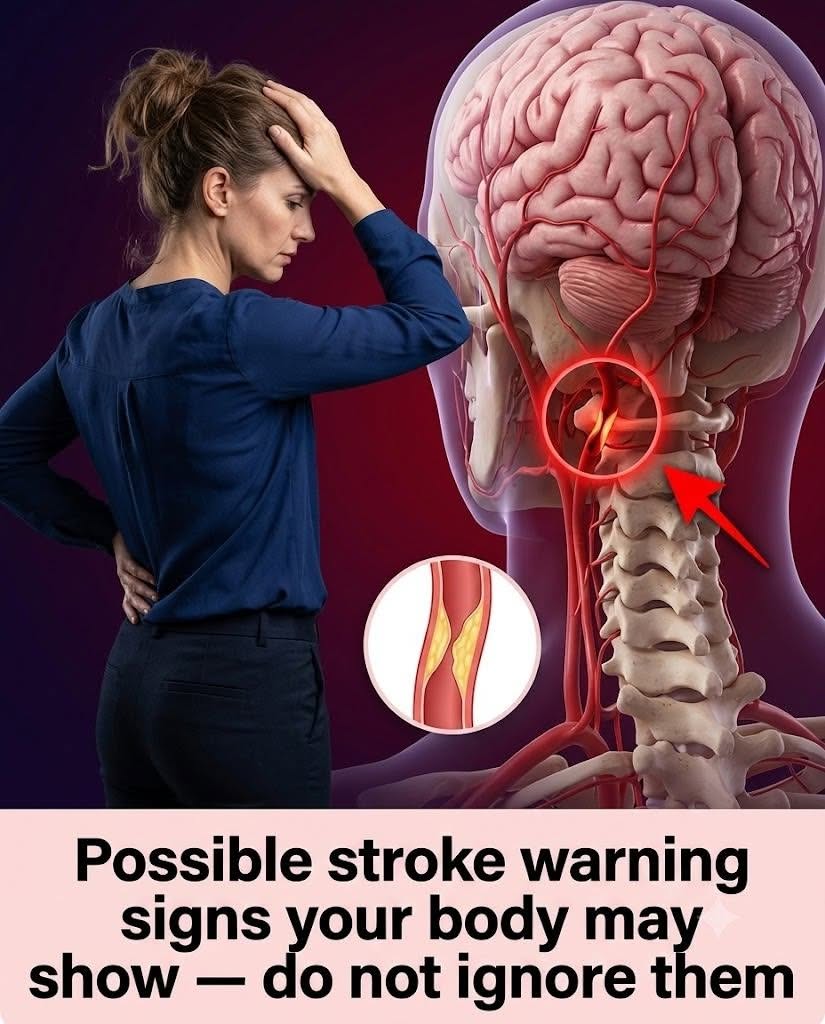
10 Early Warning Signs of a Stroke Everyone Should Know to Take Prompt Action
A stroke can happen suddenly, and every minute matters. Recognizing the warning signs quickly can help someone receive treatment as soon as possible.
1. Sudden Weakness or Numbness
Sudden weakness or numbness in the face, arm, or leg, especially on one side of the body, is a major warning sign.
2. Facial Drooping
Ask the person to smile. If one side of the face droops or feels numb, seek emergency medical help immediately.
3. Trouble Speaking
Sudden slurred speech, difficulty finding words, or being unable to understand what others are saying can indicate a stroke.
4. Sudden Vision Problems
Blurred or double vision, loss of vision, or sudden difficulty seeing in one or both eyes can occur.
5. Sudden Severe Headache
A sudden, unusually severe headache—particularly one with no obvious cause—can be a warning sign, especially when accompanied by other neurological symptoms.
6. Dizziness or Loss of Balance
Sudden dizziness, difficulty walking, loss of coordination, or unexplained balance problems can occur during a stroke.
7. Confusion
Sudden confusion or difficulty understanding what is happening around you should be taken seriously.
8. Difficulty Walking
A person may suddenly stumble, become unsteady, or have trouble coordinating their movements.
9. Difficulty Swallowing
Sudden problems swallowing can sometimes occur with a stroke and may increase the risk of choking.
10. Sudden Loss of Coordination
Unexpected difficulty controlling an arm or leg, reaching for objects, or performing familiar movements can be a warning sign.
Remember FAST
A simple way to recognize common stroke symptoms is FAST:
F — Face: Does one side of the face droop?
A — Arms: Is one arm weak or numb?
S — Speech: Is speech strange, slurred, or difficult to understand?
T — Time: Call emergency medical services immediately.
⚠️ Don’t wait for symptoms to disappear. Even if symptoms improve or go away, the person may have experienced a transient ischemic attack (TIA), sometimes called a “mini-stroke,” which also requires urgent medical evaluation.
If you suspect a stroke, seek emergency medical care immediately. Do not drive the person yourself if emergency medical services are available.