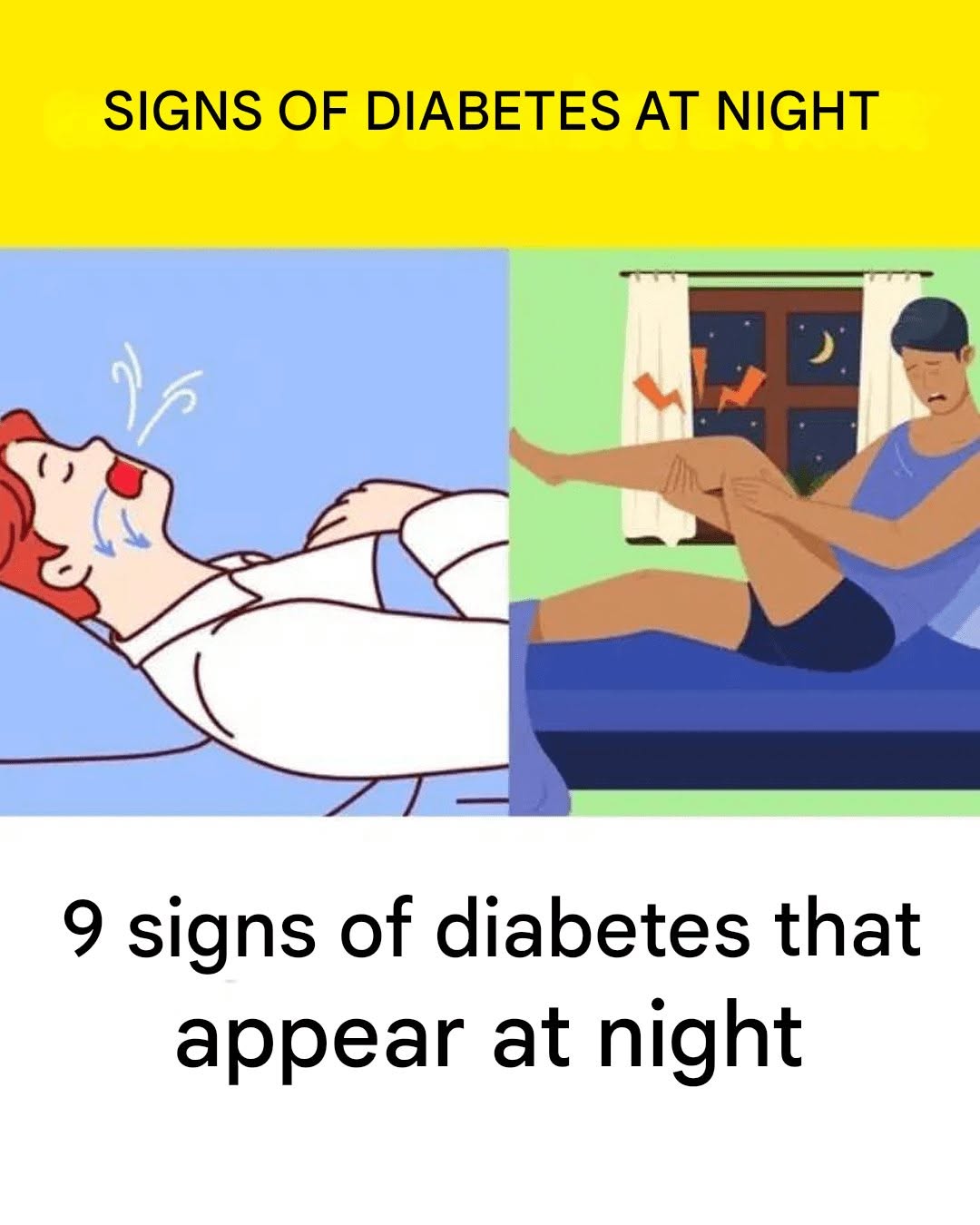
9 Signs of Diabetes That May Appear at Night 🌙
Some symptoms of diabetes can become especially noticeable at night. However, these signs don’t prove that you have diabetes—many other conditions can cause similar symptoms.
1. 🚽 Waking Up Frequently to Urinate
Needing to urinate repeatedly during the night, especially when this is new for you, can occur when blood glucose is elevated.
2. 💧 Intense Thirst
High blood sugar can cause increased urination, which may leave you unusually thirsty—even after drinking plenty of fluids.
3. 🥵 Night Sweats
Sweating during sleep can sometimes occur when blood sugar drops too low, particularly in people taking insulin or certain diabetes medications.
4. 😴 Poor or Interrupted Sleep
Frequent urination, thirst, sweating, or discomfort can repeatedly interrupt sleep.
5. 🦵 Leg Cramps or Unusual Tingling
Nerve problems associated with diabetes can cause burning, tingling, numbness, or discomfort in the feet and legs, which may be more noticeable at night.
6. 👁️ Blurry Vision
Temporary changes in blood glucose can affect the shape of the eye’s lens and cause episodes of blurred vision.
7. 🍽️ Unusual Hunger
Some people with diabetes experience increased hunger because glucose isn’t being used normally by the body’s cells.
8. 😩 Unexplained Fatigue
Poor sleep combined with high blood glucose can contribute to feeling unusually tired the next day.
9. 🦶 Slow-Healing Cuts or Sores
Diabetes can impair circulation and immune function, potentially making wounds slower to heal. This isn’t necessarily something you’ll notice only at night, but it can be an important warning sign.
When Should You Get Checked?
If you’re experiencing several of these symptoms, especially frequent nighttime urination, excessive thirst, unexplained weight loss, or persistent fatigue, consider speaking with a healthcare professional and asking whether blood-glucose testing is appropriate.
🚨 If you have diabetes and develop confusion, severe weakness, vomiting, difficulty breathing, or loss of consciousness, seek emergency medical care.
The only way to know whether you have diabetes is through appropriate medical testing—not symptoms alone.