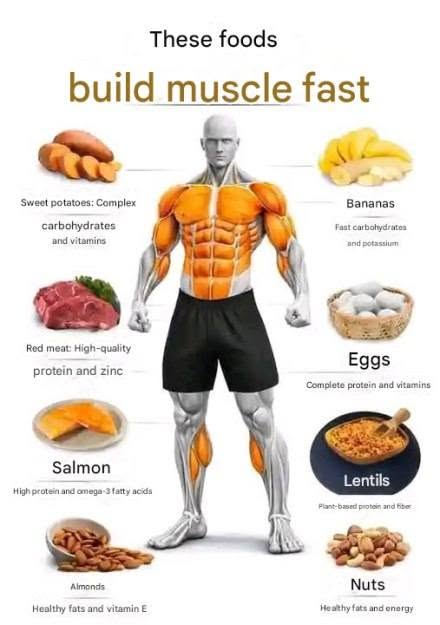
6 Foods That Can Help Build Muscle Mass
Building muscle isn’t only about lifting weights. Your body also needs enough protein, calories, carbohydrates, healthy fats, vitamins, and minerals to repair muscle tissue and support growth.
While no single food can build muscle by itself, including protein-rich, nutrient-dense foods in a balanced diet can make it easier to meet your nutritional needs.
Here are six excellent choices.
1. Eggs
Eggs are a convenient source of high-quality protein and contain several nutrients involved in normal muscle function.
They can be an easy addition to breakfast, lunch, or dinner.
Try them boiled, scrambled, or added to a vegetable omelet.
2. Chicken
Chicken breast and other lean cuts of chicken provide plenty of protein without a large amount of fat.
Protein supplies amino acids that your body uses to repair and build muscle tissue after exercise.
Pair chicken with rice, potatoes, whole grains, or vegetables for a balanced meal.
3. Greek Yogurt
Greek yogurt can provide a substantial amount of protein in a convenient serving.
It also supplies calcium and other nutrients.
Choose plain Greek yogurt and add fruit, oats, nuts, or seeds for additional carbohydrates, healthy fats, and calories.
4. Fish
Fish such as salmon, tuna, sardines, and other varieties can provide high-quality protein.
Fatty fish such as salmon also contain omega-3 fats, which are important for overall health.
A meal combining fish with potatoes, rice, or whole grains and vegetables can provide a nutritious combination of protein and energy.
5. Beans and Lentils
You don’t need to eat meat to support muscle growth.
Beans, lentils, chickpeas, and other legumes provide protein along with carbohydrates and fiber.
They are especially useful for people following vegetarian or mostly plant-based diets.
Try adding lentils to soups, beans to salads, or chickpeas to grain bowls.
6. Nuts and Nut Butters
Almonds, peanuts, walnuts, and other nuts provide protein along with healthy fats and calories.
Nut butters can also make it easier to increase your calorie intake if you’re struggling to eat enough food to support muscle gain.
Try adding peanut or almond butter to oatmeal, whole-grain toast, smoothies, or yogurt.
Don’t Forget the Rest of Your Diet
Eating protein-rich foods is important, but muscle growth requires more than protein alone.
Your body also needs enough total energy and carbohydrates to support training and recovery.
Foods such as rice, potatoes, oats, whole grains, fruits, and vegetables can provide carbohydrates and other nutrients that complement protein-rich foods.
How Much Protein Do You Need?
Protein needs vary depending on body size, age, activity level, training goals, and overall health.
For people who regularly perform resistance training, research commonly supports a higher protein intake than the basic minimum needed for sedentary adults.
Instead of relying on one enormous protein-heavy meal, spreading protein-containing foods throughout the day can be a practical approach.
Strength Training Still Matters
Food provides the building blocks, but resistance training is a major stimulus for muscle growth.
A balanced combination of progressive strength training, adequate nutrition, sufficient sleep, and recovery generally works better than focusing on any single food or supplement.
The Bottom Line
If you’re trying to build muscle, focus on your overall eating pattern rather than searching for a single “muscle-building” food.
Eggs, chicken, Greek yogurt, fish, beans and lentils, and nuts can all be useful parts of a balanced diet.
Combine nutritious foods with regular resistance training and adequate recovery, and give your body time to adapt.
And remember: muscle gain takes consistency. There is no food that can replace a well-structured training and nutrition plan.