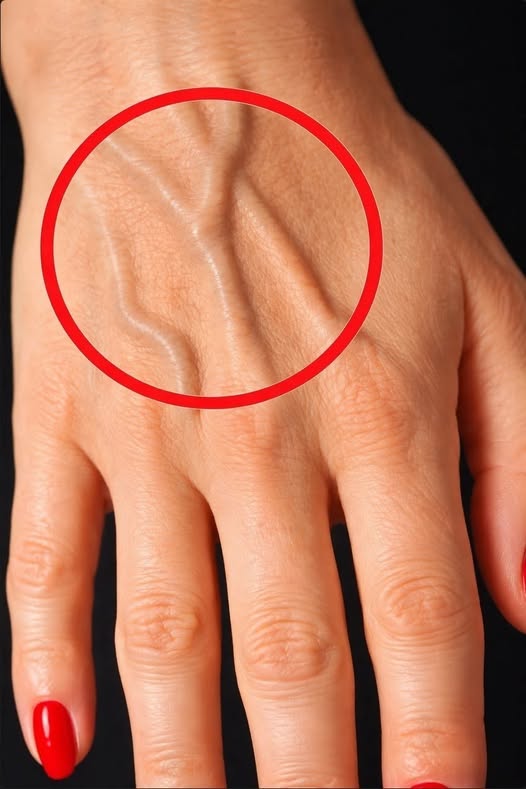
🩸 If Your Veins Are Visible, It May Mean Something About Your Body…
Have you ever looked at your hands, arms, or legs and noticed that your veins appear more visible than usual? 💙 You might wonder whether it is a sign of good health, aging, dehydration, or an underlying medical condition.
The truth is that visible veins are often completely normal. Their appearance depends on several factors, including your skin, body composition, genetics, and circulation.
Let’s explore what visible veins may mean and when you should pay attention. 👇
💪 1. You May Have Less Fat Under Your Skin
Veins can appear more prominent when there is less subcutaneous fat between the skin and the blood vessels.
This is common in people with naturally lean body types and does not necessarily indicate a health problem.
🏋️ 2. You May Be Physically Active
During exercise, blood flow to working muscles increases, and veins may temporarily become more noticeable.
This is particularly common after strength training or intense physical activity. The veins often become less prominent after the body cools down.
🌡️ 3. Heat May Make Your Veins More Visible
In warm weather, blood vessels near the skin can widen to help your body release heat.
As a result, veins may appear more prominent after a hot shower, during exercise, or on a warm day.
🧬 4. Your Genetics and Skin May Play a Role
Some people naturally have more visible veins because of inherited characteristics, thinner skin, or lighter skin tones.
Veins can also become more noticeable with age as the skin becomes thinner and loses some of its elasticity.
💧 5. Are Visible Veins a Sign of Dehydration?
Not necessarily. Vein visibility alone cannot reliably tell you whether you are dehydrated.
Common signs of dehydration include thirst, dry mouth, darker urine, and urinating less frequently. Severe dehydration can cause dizziness, confusion, or fainting and requires urgent medical attention.
🦵 6. Sometimes, Visible Veins May Indicate a Circulation Problem
Veins that are enlarged, twisted, or bulging—particularly in the legs—may be varicose veins. These can cause aching, heaviness, itching, or swelling.
If prominent veins are accompanied by persistent discomfort or skin changes, a healthcare professional can assess them.
⚠️ When Should You Be Concerned?
Visible veins alone are usually not an emergency. However, seek medical attention if you notice:
- Sudden swelling or pain in one arm or leg, particularly with warmth or redness, which may indicate a blood clot.
- A vein that becomes suddenly painful, red, or hard.
- Persistent swelling, skin discoloration, or sores around prominent leg veins.
- Sudden prominent veins accompanied by chest pain or difficulty breathing—call emergency services immediately.
Do not massage a painful, swollen limb if a blood clot is suspected.
🌿 What Can You Do to Support Healthy Circulation?
A few everyday habits can help support your overall vascular health:
✅ Stay adequately hydrated.
✅ Move regularly and avoid sitting still for long periods.
✅ Take breaks during prolonged standing or sitting.
✅ Maintain a balanced diet and avoid smoking.
✅ Seek medical advice if you develop new or worsening symptoms.
You do not need to hide naturally visible veins or try to make them disappear if they are not causing problems.
❤️ Final Thoughts
If your veins are visible, it may simply mean that your skin is thin, you have less fat beneath it, you are physically active, or your body is responding to heat.
Visible veins do not automatically mean you are unhealthy, dehydrated, or suffering from poor circulation.
Pay attention to sudden changes, pain, swelling, or other unusual symptoms rather than judging your health by appearance alone.
💙 Your body is unique, and understanding what is normal for you is an important part of taking care of yourself.