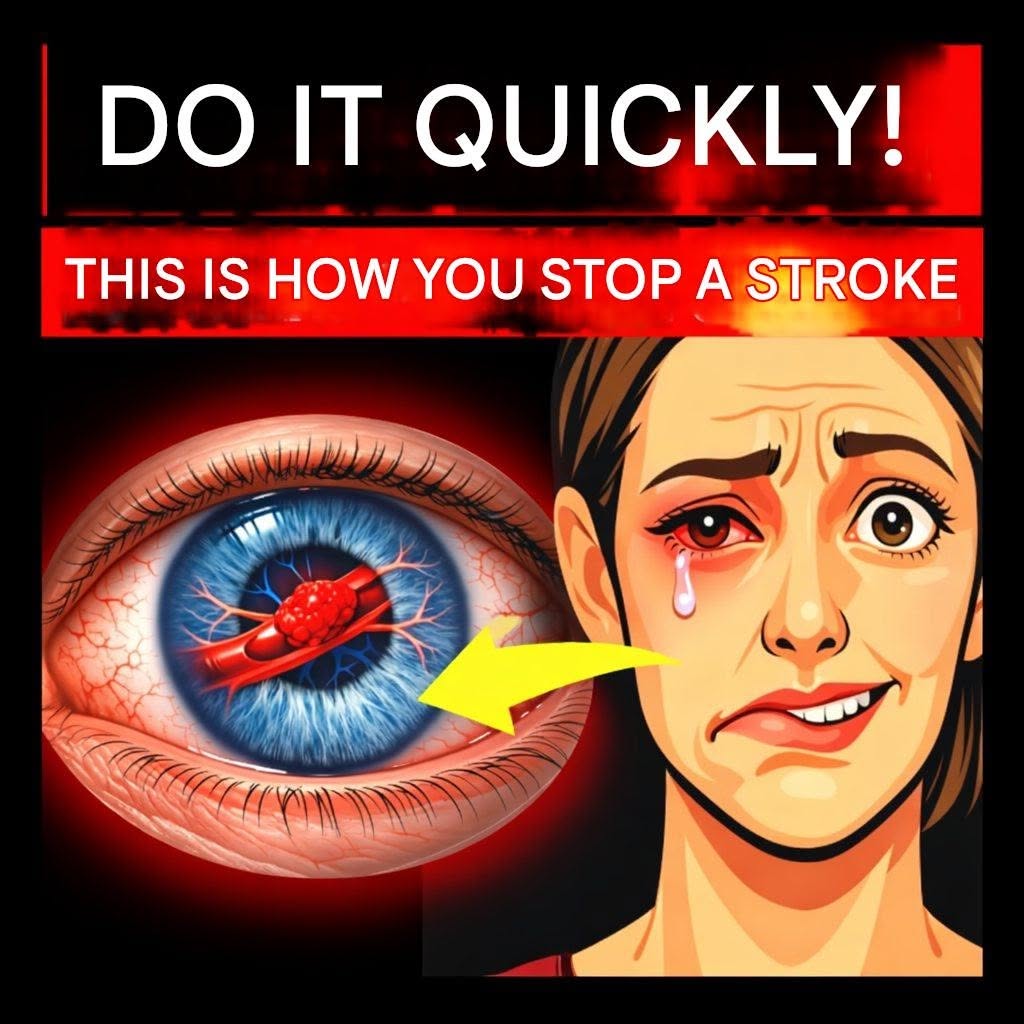
Stroke: What to Do in the First Hours According to Medical Recommendations
A stroke can happen suddenly—and the first few hours can make an enormous difference.
The most important thing to remember is simple:
Don’t wait for the symptoms to improve. Treat a suspected stroke as an emergency.
Stroke happens when blood flow to part of the brain is blocked or when a blood vessel in the brain ruptures. Because brain cells can begin dying within minutes, getting emergency care quickly is critical. (www.stroke.org)
🚨 First: Recognize the Warning Signs
Think B.E. F.A.S.T.
B — Balance: Sudden loss of balance or coordination.
E — Eyes: Sudden blurred, double, or lost vision.
F — Face: One side of the face droops or feels numb.
A — Arm: One arm becomes weak or numb.
S — Speech: Speech becomes slurred, confused, or difficult to understand.
T — Time: Call your local emergency number immediately. (www.stroke.org)
Other possible symptoms include sudden numbness or weakness, confusion, difficulty understanding speech, or a sudden severe headache with no known cause. (www.stroke.org)
⏱️ 1. Note When the Symptoms Started
Write down the exact time the person was last known to be normal—or the time symptoms were first noticed.
This information can be extremely important to the emergency team because some stroke treatments are time-sensitive. (www.stroke.org)
If the person woke up with symptoms, tell the medical team when they were last known to be well before going to sleep.
📞 2. Call an Ambulance
Don’t drive the person yourself if emergency medical services are available.
Calling an ambulance can allow emergency personnel to begin assessment and care while transporting the patient and alert the hospital’s stroke team. (www.stroke.org)
Even if symptoms disappear after a few minutes, don’t ignore them. A transient ischemic attack (TIA) can be a warning of a future stroke and still requires urgent medical assessment. (www.stroke.org)
💊 3. Don’t Give Aspirin on Your Own
This is a particularly important warning.
Not every stroke is caused by a blood clot. Some strokes are caused by bleeding in the brain.
Taking aspirin during an undiagnosed stroke could potentially make a bleeding stroke worse. The American Stroke Association therefore advises against taking aspirin for suspected stroke unless directed by medical professionals. (www.stroke.org)
🍽️ 4. Don’t Give Food, Drinks, or Unprescribed Medicine
A stroke can interfere with swallowing and increase the risk of choking or aspiration.
Until the person has been medically assessed, avoid giving food, drinks, or medications unless emergency professionals specifically instruct you to do so.
🏥 5. Get to a Hospital That Can Evaluate Stroke Quickly
At the hospital, doctors may perform brain imaging such as a CT or MRI along with blood tests and neurological assessment to determine what type of stroke has occurred. (www.stroke.org)
This distinction matters because ischemic stroke and bleeding stroke require different treatments.
💉 6. Some Ischemic Strokes Can Be Treated With Clot-Busting Medicine
For eligible patients with an ischemic stroke, intravenous thrombolytic medicines such as alteplase or tenecteplase may be used within an appropriate time window.
Current American Stroke Association guidance emphasizes treatment as quickly as possible, with IV thrombolysis available for eligible patients within 4.5 hours of symptom onset. (www.stroke.org)
Not everyone qualifies. Doctors must first determine the type of stroke and whether the treatment is safe.
🧠 7. Some Patients May Benefit From Clot Removal
For certain patients with a large blood-vessel blockage, doctors can perform mechanical thrombectomy, a procedure that physically removes the clot.
Selected patients may benefit even when they arrive later—sometimes up to 24 hours after symptoms began, depending on imaging and other eligibility criteria. (www.stroke.org)
But this does not mean it’s safe to wait.
Earlier treatment is better.
❤️ What Family Members Can Do While Waiting
Stay with the person.
Keep them as calm and comfortable as possible.
Gather their medication list and medical information if readily available.
Tell emergency personnel:
- When symptoms began
- What symptoms appeared
- What medications they take
- Whether they take blood thinners
- Any known medical conditions
- When they were last known to be well
And most importantly:
Don’t waste time trying home remedies.
🚨 The Biggest Mistake Is Waiting
A stroke isn’t something to “sleep off.”
It isn’t something to treat with garlic, herbal drinks, massage, or aspirin at home.
And if symptoms disappear, that doesn’t necessarily mean the danger has passed.
Call emergency services immediately.
The sooner a stroke is recognized and evaluated, the more opportunities doctors may have to limit brain damage and improve recovery. (www.stroke.org)
Final Message
Remember:
B — Balance
E — Eyes
F — Face
A — Arm
S — Speech
T — Time
When stroke symptoms appear, time is brain.
Don’t wait for tomorrow.
Get emergency medical help now.
This article is for education and does not replace emergency medical care. If you or someone with you has possible stroke symptoms right now, contact your local emergency service immediately.