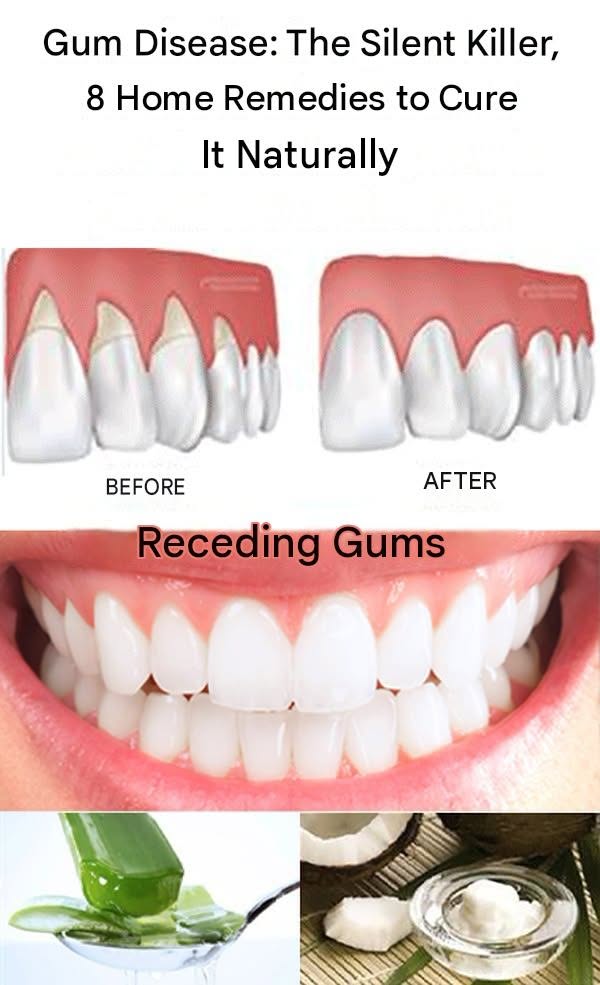
Gum Disease: The Silent Problem You Shouldn’t Ignore — 8 Home Habits That Can Support Healthier Gums
You brush your teeth every day.
You might even floss regularly.
So when your gums start bleeding, becoming swollen, or feeling tender, it’s easy to think:
“It’s probably nothing.”
But gum disease can develop gradually, and early symptoms are sometimes easy to overlook.
The good news is that there are simple things you can do at home to support healthier gums.
However, there’s an important distinction:
Home remedies can help with prevention and symptom management, but they cannot reliably cure established periodontal disease.
If bacteria and hardened plaque have formed below the gumline, professional dental treatment may be necessary.
🦷 1. Brush Gently Twice a Day
Brushing removes plaque—the sticky bacterial film that builds up around your teeth.
Use a soft-bristled toothbrush and fluoride toothpaste.
Brush gently along the gumline rather than aggressively scrubbing your gums.
Brushing too hard can irritate the gums and contribute to enamel or gum damage.
🧵 2. Clean Between Your Teeth Every Day
Your toothbrush can’t effectively clean every space between your teeth.
Floss or use an appropriate interdental cleaner to remove plaque and food particles from these areas.
If your gums bleed when you first begin cleaning between your teeth, don’t automatically assume that flossing is damaging them.
Inflamed gums can bleed easily.
But persistent bleeding should be discussed with a dental professional.
🧂 3. Try a Warm Salt-Water Rinse
A gentle salt-water rinse can temporarily soothe irritated gums.
Mix a small amount of salt into warm water, swish gently, and spit it out.
Don’t swallow it.
A salt-water rinse isn’t a cure for gum disease, but it can be a simple supportive measure.
🚭 4. Don’t Smoke
Smoking is a major risk factor for gum disease and can make treatment less successful.
If you smoke, quitting is one of the most meaningful things you can do for your oral and overall health.
💧 5. Drink Water Regularly
Water helps keep your mouth hydrated and can help wash away food particles.
It’s especially useful as a replacement for sugary drinks, which can contribute to tooth decay.
If your mouth is persistently dry, talk with a healthcare professional or dentist because medications and medical conditions can sometimes contribute to dry mouth.
🥦 6. Eat a Nutrient-Rich Diet
Your gums are living tissue and need adequate nutrition.
Build meals around vegetables, fruits, whole grains, beans, nuts, seeds, and protein-rich foods.
Vitamin C is particularly important for healthy connective tissue.
A balanced diet supports your mouth as part of supporting your overall health.
🧪 7. Be Careful With “Natural” Treatments
You’ll find online recommendations for applying things like lemon juice, hydrogen peroxide, baking soda, essential oils, or undiluted substances directly to the gums.
Natural doesn’t automatically mean safe.
Some DIY treatments can irritate or chemically burn oral tissues.
Avoid experimenting with concentrated substances inside your mouth unless a dental professional has specifically recommended them.
🦷 8. Don’t Skip Dental Checkups
This may be the most important “home remedy” of all:
Know when home care isn’t enough.
A dentist or dental hygienist can detect inflammation, plaque buildup, gum pockets, bone loss, and other problems that you can’t reliably diagnose yourself.
Professional cleaning may be necessary when tartar has hardened onto the teeth.
🚨 Signs You Shouldn’t Ignore
Make a dental appointment if you experience:
- Gums that regularly bleed
- Red or swollen gums
- Persistent bad breath
- Receding gums
- Gums that feel tender
- Loose or shifting teeth
- Pain when chewing
- Pus around the gums
- Persistent changes in your bite
Loose teeth or significant swelling deserve prompt professional attention.
❤️ Why Gum Health Matters
Gum disease isn’t simply about having an imperfect smile.
Advanced periodontal disease can damage the tissues and bone that support your teeth and can eventually lead to tooth loss.
That’s why treating the problem early is so important.
And while researchers continue to investigate links between periodontal disease and other health conditions, gum disease shouldn’t be presented as a proven cause of every major illness.
The Bottom Line
There isn’t a magic ingredient that can “cure” gum disease overnight.
But healthier habits can make a real difference:
Brush twice daily.
Clean between your teeth.
Avoid smoking.
Eat a balanced diet.
Stay hydrated.
Don’t ignore bleeding or swelling.
And see a dental professional when symptoms persist.
Your gums may be small, but they deserve just as much attention as the rest of your body.
📌 Save this article and share it with someone who keeps ignoring bleeding gums.
This article is for general education and isn’t a substitute for professional dental diagnosis or treatment.