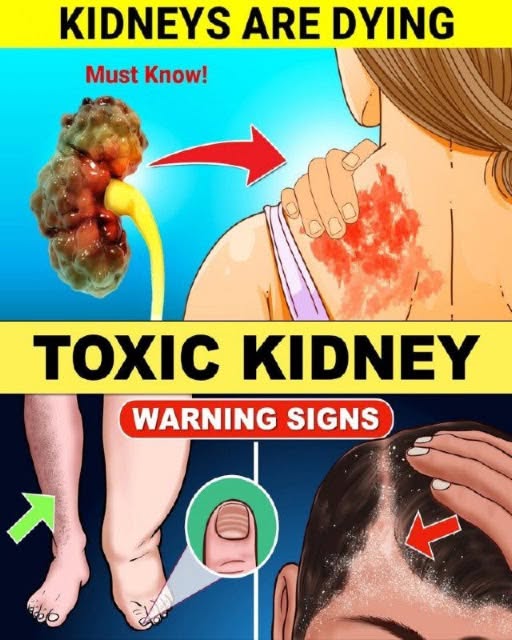
9 Warning Signs Your Kidneys May Be in Trouble | Tests That Can Help Protect Kidney Health
Your kidneys work quietly every day, filtering waste from your blood, balancing fluids and minerals, and helping regulate blood pressure.
The problem?
Kidney disease can develop without obvious symptoms for a long time.
By the time someone feels seriously unwell, kidney function may already be significantly reduced.
That’s why recognizing warning signs—and getting the right tests—can be so important.
But there’s one claim to correct immediately:
No test can guarantee that you’ll avoid dialysis.
The good news is that detecting kidney disease early can give doctors an opportunity to identify the cause, control risk factors, and slow progression in many people.
Here are nine warning signs worth knowing.
1. Swelling Around Your Feet and Ankles
When the kidneys aren’t functioning properly, the body may retain extra salt and fluid.
This can contribute to swelling, particularly around the feet, ankles, legs, hands, or sometimes around the eyes.
Persistent unexplained swelling should be medically evaluated.
2. Changes in Urination
Pay attention to persistent changes such as:
- Urinating much more or less than usual
- Frequently waking during the night to urinate
- Foamy or unusually bubbly urine
- Blood in the urine
- Difficulty urinating
Not every change indicates kidney disease, but persistent abnormalities deserve attention.
3. Persistent Fatigue or Weakness
Advanced kidney disease can contribute to anemia and a buildup of waste products in the bloodstream.
That can cause tiredness, weakness, difficulty concentrating, or reduced stamina.
Fatigue is extremely common, however, so it should not automatically be blamed on the kidneys.
4. Nausea or Loss of Appetite
As kidney function becomes severely impaired, waste products can accumulate in the blood.
This can contribute to nausea, vomiting, poor appetite, and an unpleasant or metallic taste in the mouth.
These symptoms require medical assessment, particularly when several occur together.
5. Itchy or Very Dry Skin
Persistent itching can occur in advanced kidney disease because of changes in mineral balance and accumulation of waste products.
But dry skin, allergies, medications, liver problems, and many other conditions can cause itching too.
6. Muscle Cramps
Changes in electrolytes and mineral levels can occur when kidney function is impaired.
This may contribute to muscle cramps or unusual weakness.
Frequent or severe cramps should be discussed with a healthcare professional rather than treated as a kidney problem automatically.
7. Shortness of Breath
Kidney disease can contribute to fluid accumulation and anemia, both of which can cause breathlessness.
However, sudden or severe difficulty breathing can be an emergency and should not be assumed to be kidney-related.
8. Trouble Concentrating or Confusion
Advanced kidney disease can affect how a person feels and functions mentally.
Confusion or major changes in alertness require prompt medical attention.
Sudden confusion is especially concerning and can have many serious causes.
9. High Blood Pressure That’s Difficult to Control
The relationship between the kidneys and blood pressure goes both ways.
High blood pressure can damage the kidneys, while kidney disease can contribute to high blood pressure.
If your blood pressure remains high despite treatment, your healthcare professional may consider whether kidney disease or another underlying problem could be contributing.
🧪 The Tests That Matter
If kidney disease is suspected, several straightforward tests can provide important information.
1. Blood Creatinine and eGFR
A blood test measures creatinine, a waste product produced by muscles.
Your healthcare professional can use the result along with other factors to estimate your eGFR, which provides an indication of how well your kidneys are filtering blood.
A single abnormal result doesn’t necessarily mean permanent kidney disease.
Trends over time are important.
2. Urine Albumin-to-Creatinine Ratio
The urine albumin-to-creatinine ratio (UACR) looks for albumin leaking into the urine.
Persistent albumin in the urine can be an important sign of kidney damage—even when eGFR is still relatively normal.
3. Routine Urinalysis
A urine test can detect abnormalities such as blood, protein, or signs of infection.
Depending on your symptoms and medical history, your clinician may order additional tests.
4. Blood Pressure Measurement
Don’t overlook this simple test.
Keeping blood pressure under control is one of the important ways to reduce the risk of kidney damage.
5. Additional Testing When Necessary
If kidney disease is suspected, your healthcare professional may recommend other tests, such as blood tests, kidney imaging, or specialized evaluations to determine the underlying cause.
The appropriate testing depends on the individual.
🚨 Can Kidney Disease Be Prevented From Reaching Dialysis?
Sometimes progression can be slowed substantially, particularly when kidney disease is identified early and its causes and risk factors are addressed.
Treatment may involve:
- Controlling blood pressure
- Managing diabetes
- Avoiding smoking
- Maintaining a healthy weight
- Reviewing medications
- Reducing excess sodium when appropriate
- Treating the underlying kidney condition
- Taking prescribed kidney-protective medications when indicated
- Regularly monitoring kidney function
But there is no guaranteed home remedy, supplement, or test that can promise to prevent dialysis.
And people with kidney disease should be especially cautious about herbal products and supplements because some can damage the kidneys or interact with medications.
❤️ Don’t Wait for Symptoms
One of the most important facts about kidney disease is that early stages may cause few or no symptoms.
That’s why people at increased risk—including those with diabetes, high blood pressure, cardiovascular disease, or a family history of kidney disease—may benefit from regular kidney testing.
Don’t wait until your kidneys are severely impaired before asking about them.
A simple blood test, urine test, and blood-pressure check can provide valuable information.
The Bottom Line
Your kidneys don’t have to “hurt” for something to be wrong.
Persistent swelling, changes in urination, unexplained fatigue, nausea, itching, cramps, breathlessness, confusion, or difficult-to-control blood pressure can all deserve medical attention.
But symptoms alone cannot diagnose kidney failure.
The most powerful step is early detection.
If you’re at risk or have concerning symptoms, talk with a healthcare professional about checking your kidney function.
📌 Save this article and share it with someone who has diabetes, high blood pressure, or a family history of kidney disease.
This article is for general education and is not a substitute for professional medical advice. Never stop prescribed medication or change treatment because of information in a social-media post.