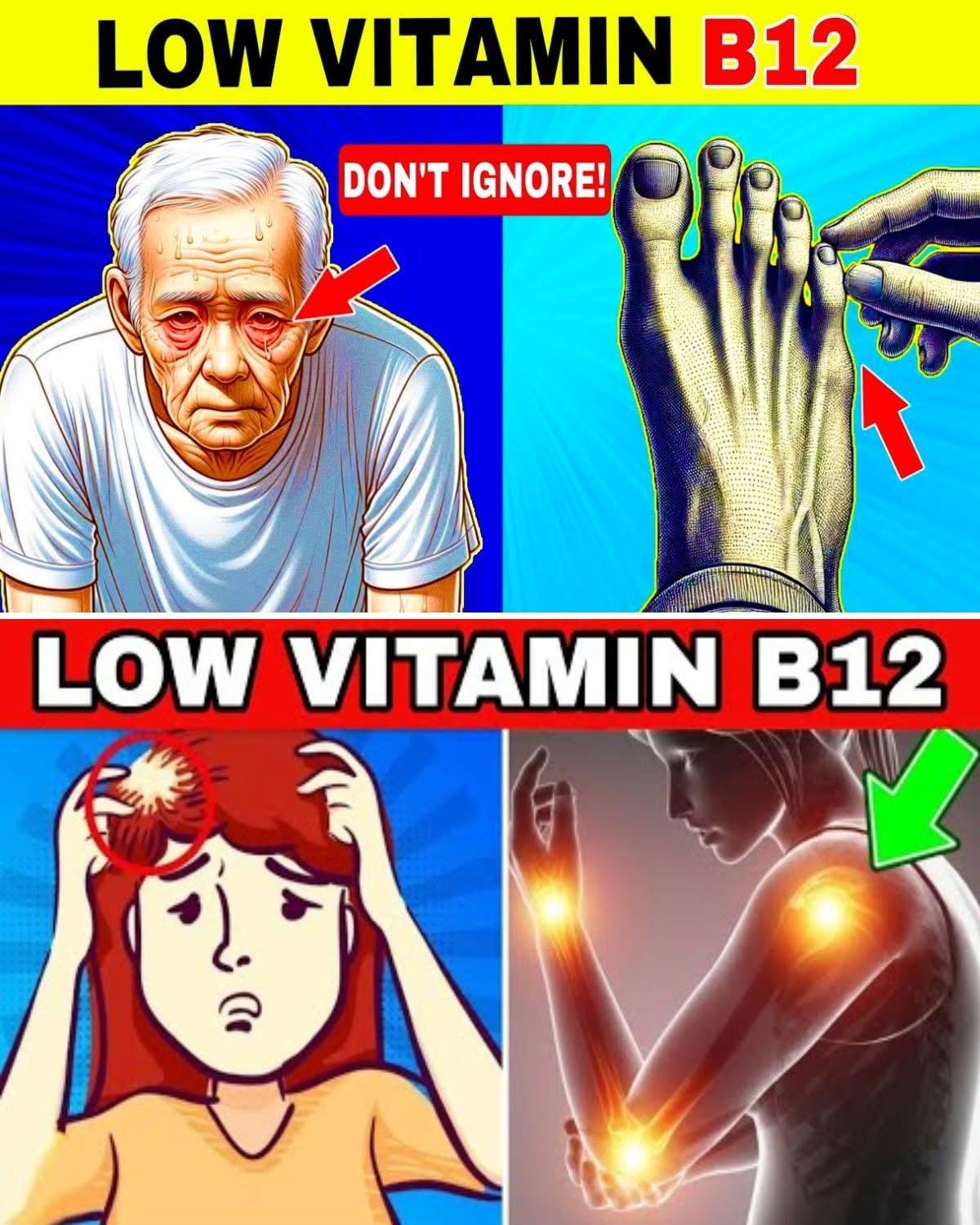
9 Hidden Signs Your Body May Need More Vitamin B12
You wake up tired even after a full night’s sleep.
Your hands occasionally feel numb or tingly.
Your memory doesn’t seem quite as sharp as it used to be.
You might blame these changes on stress, aging, poor sleep, or simply being busy.
But sometimes, symptoms like these can be associated with vitamin B12 deficiency.
Vitamin B12 is essential for making healthy red blood cells, maintaining normal nerve function, and producing DNA. A deficiency can develop gradually, which means some people don’t realize they’re low until symptoms become noticeable.
Here are nine signs worth knowing.
1. Persistent Fatigue
Feeling tired from time to time is normal.
But persistent fatigue or weakness can occur when B12 deficiency contributes to anemia.
Because tiredness has many possible causes, it isn’t enough by itself to diagnose a deficiency.
2. Numbness or Tingling
One of the more distinctive symptoms of B12 deficiency is a “pins and needles” sensation, particularly in the hands or feet.
Some people experience numbness, burning sensations, or unusual sensitivity.
This happens because B12 is important for normal nerve function.
Don’t ignore persistent or worsening neurological symptoms.
3. Balance Problems
A significant B12 deficiency can affect the nervous system and may contribute to difficulty walking or maintaining balance.
If you’re suddenly having trouble walking, are repeatedly falling, or develop new weakness, seek medical evaluation rather than assuming it’s simply a vitamin problem.
4. Pale or Yellowish Skin
B12 deficiency can contribute to anemia, which may make the skin look unusually pale.
In some cases, breakdown of abnormal red blood cells can contribute to a subtle yellowish appearance.
However, yellow skin or yellow eyes can have many causes and should be medically evaluated.
5. A Swollen or Sore Tongue
Some people with B12 deficiency develop glossitis, which can make the tongue appear red, smooth, swollen, or painful.
Mouth soreness or changes in taste can also occur.
6. Changes in Memory or Thinking
B12 deficiency can sometimes be associated with problems such as difficulty concentrating, confusion, or memory changes.
But these symptoms have many possible causes.
If cognitive changes are persistent or progressing, talk with a healthcare professional rather than assuming you simply need a vitamin supplement.
7. Mood Changes
Some people with B12 deficiency experience mood changes, irritability, or depressive symptoms.
Again, these symptoms are nonspecific.
They can occur for many reasons, so testing and professional evaluation are important before assuming B12 is the cause.
8. Vision Problems
In severe cases, B12 deficiency can affect the optic nerve and contribute to visual problems.
New or sudden vision loss requires urgent medical attention.
Don’t attempt to treat significant vision changes with supplements at home.
9. Heart Palpitations or Shortness of Breath
If B12 deficiency causes significant anemia, the heart may have to work harder to deliver oxygen around the body.
That can contribute to symptoms such as shortness of breath, weakness, dizziness, or a racing heartbeat.
These symptoms can also indicate many other conditions, some of which require prompt treatment.
Who Is More Likely to Become B12 Deficient?
B12 deficiency isn’t simply a problem caused by eating too few vitamins.
Risk can increase in people who:
- Follow a strict vegan diet without reliable B12 sources
- Have certain gastrointestinal conditions
- Have undergone some stomach or intestinal surgeries
- Take certain medications that interfere with B12 absorption
- Are older adults with reduced stomach acid
- Have problems absorbing nutrients
That’s why simply eating more B12-rich foods isn’t always enough.
Sometimes the problem is absorption rather than intake.
🥩 Where Does Vitamin B12 Come From?
Natural B12 is found mainly in animal-derived foods, including:
- Fish and seafood
- Meat
- Eggs
- Milk and other dairy products
Many plant-based foods are fortified with B12, including some breakfast cereals and nutritional yeast products.
People following a vegan diet generally need a reliable source of B12 from fortified foods or supplements.
🧪 How Do You Know If You’re Actually Deficient?
Symptoms alone can’t confirm B12 deficiency.
A healthcare professional can assess your symptoms and medical history and may recommend blood tests.
Depending on the situation, additional testing may be needed to clarify whether B12 deficiency is actually present.
This matters because taking large amounts of supplements without knowing the cause of your symptoms may delay diagnosis of another condition.
⚠️ Don’t Ignore Neurological Symptoms
This is particularly important.
Untreated B12 deficiency can cause neurological problems, and some nerve damage can become permanent if treatment is delayed.
If you develop persistent numbness, weakness, balance problems, confusion, or other unexplained neurological changes, arrange medical evaluation.
The Bottom Line
Vitamin B12 is a small nutrient with a very important job.
A deficiency can develop slowly and may cause symptoms that are easy to blame on everyday life.
Fatigue, tingling, balance problems, mouth changes, cognitive symptoms, and anemia-related symptoms can all have many causes—but B12 deficiency is one possibility worth checking.
Don’t diagnose yourself from a symptom list.
If you’re experiencing several of these symptoms or have risk factors for deficiency, talk with a healthcare professional about whether testing makes sense.
📌 Save this article and share it with someone who may be overlooking persistent symptoms.
This article is for general education and isn’t a substitute for medical diagnosis or treatment.