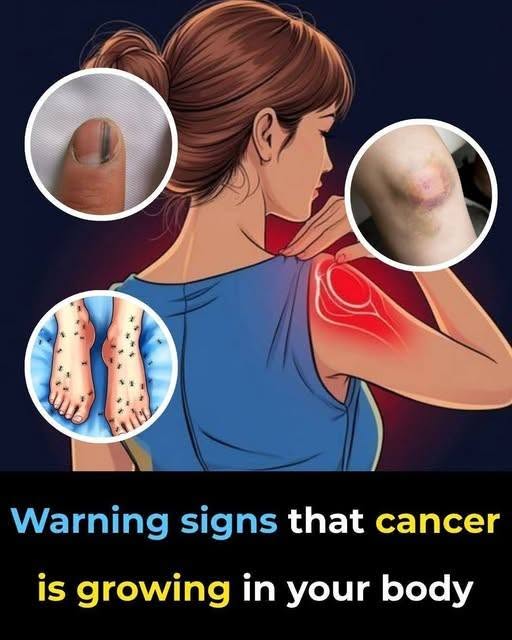
25 Worrying Signs Your Body Is Trying to Warn You of Serious Health Problems—and What to Do About Them
Your body doesn’t always give you a dramatic warning when something is wrong.
Sometimes the first clue is subtle.
You’re more tired than usual. A strange lump appears. Your weight changes without explanation. Your digestion suddenly isn’t the same.
Many of these symptoms have harmless explanations—but some deserve medical attention, particularly when they are new, persistent, worsening, or occurring together.
Here are 25 symptoms you shouldn’t automatically ignore.
1. Unexplained Weight Loss
Losing weight without trying can have many causes, including stress, digestive problems, thyroid disorders, infections, and cancer.
If the weight loss is significant or continues without an obvious reason, arrange a medical evaluation.
2. Persistent Unusual Fatigue
Everyone gets tired.
But exhaustion that doesn’t improve with adequate rest may deserve investigation, especially when accompanied by weakness, breathlessness, weight loss, or other new symptoms.
3. Chest Pain or Pressure
Chest discomfort can have many causes, but sudden pressure, squeezing, or pain that doesn’t go away—especially with shortness of breath, sweating, nausea, or pain spreading to the arm, neck, jaw, or back—can be a medical emergency. (nhs.uk)
Don’t wait to see if it passes. Seek emergency medical help.
4. Sudden Shortness of Breath
Unexpected or severe difficulty breathing should never be casually dismissed.
If breathing becomes severely difficult, particularly with chest pain, fainting, blue or gray lips/skin, or confusion, seek emergency care.
5. A Sudden Change in Speech
Slurred speech, difficulty finding words, or suddenly being unable to understand speech can be signs of a stroke.
Remember FAST: Face, Arms, Speech, Time. (nhs.uk)
6. Sudden Weakness or Numbness on One Side
Sudden weakness or numbness involving the face, arm, or leg—particularly on one side—requires urgent assessment because it can be a sign of stroke. (nhs.uk)
7. Sudden Vision Changes
Sudden loss of vision, double vision, or significant new visual disturbance can have several causes, some of which require urgent treatment.
Don’t assume it’s simply aging.
8. A Severe, Sudden Headache
A sudden, unusually severe headache—particularly one that feels dramatically different from previous headaches—requires prompt medical attention.
If it occurs with weakness, confusion, vision problems, vomiting, or speech difficulties, seek emergency care.
9. A New or Changing Lump
A lump doesn’t automatically mean cancer.
Cysts, infections, swollen lymph nodes, and other benign conditions can cause lumps.
But a new lump that persists, grows, becomes hard, or changes should be assessed by a healthcare professional.
10. Blood in Your Stool
Blood in the stool can result from relatively common conditions such as hemorrhoids, but it can also indicate bleeding elsewhere in the digestive tract.
Persistent bleeding, black or very dark stools, or significant amounts of blood require medical assessment. (nhs.uk)
11. Blood in Your Urine
Even a small amount of unexplained blood in the urine deserves medical attention.
It can occur with urinary infections, kidney stones, medications, or other conditions—including urinary-tract cancers.
12. Persistent Abdominal Pain
Occasional stomach discomfort is common.
Persistent or worsening abdominal pain—especially when accompanied by vomiting, fever, swelling, weight loss, or changes in bowel habits—should be evaluated.
13. Difficulty Swallowing
Feeling as though food repeatedly sticks in your throat or chest shouldn’t simply be ignored.
It can be caused by reflux and other treatable conditions, but persistent swallowing difficulties need medical evaluation.
14. Persistent Changes in Bowel Habits
A lasting change in stool frequency, consistency, or appearance can have many causes.
If the change persists for several weeks—particularly with bleeding, abdominal pain, fatigue, or unexplained weight loss—talk to a healthcare professional.
15. Persistent Heartburn or Indigestion
Occasional indigestion is common.
But symptoms that become frequent, severe, or noticeably different from your usual pattern deserve evaluation rather than endless self-treatment.
16. Repeated Vomiting
Repeated or unexplained vomiting can lead to dehydration and may signal an underlying gastrointestinal, neurological, metabolic, or other problem.
Seek prompt medical advice if it continues or occurs with severe pain, blood, confusion, or dehydration.
17. Persistent Fever
A fever that doesn’t resolve, repeatedly returns, or occurs with unexplained weight loss, night sweats, severe pain, breathing difficulties, or other concerning symptoms should be evaluated.
18. Drenching Night Sweats
Occasional sweating during sleep can happen because of temperature, bedding, hormones, medications, or other ordinary causes.
But persistent drenching night sweats—particularly alongside fever, weight loss, swollen lymph nodes, or fatigue—are worth discussing with a doctor.
19. A Wound That Won’t Heal
A sore that doesn’t heal normally deserves attention.
This is particularly important for people with diabetes or circulation problems, because reduced blood flow or high blood sugar can interfere with healing.
20. Persistent Swelling in the Legs
Leg swelling can have many causes, including medications, venous problems, heart or kidney conditions, and prolonged sitting.
Sudden swelling of one leg, especially with pain, warmth, or redness, requires prompt medical evaluation because a blood clot is one possible cause.
21. Yellow Skin or Yellow Eyes
Yellowing of the skin or whites of the eyes—known as jaundice—can be associated with problems involving the liver, gallbladder, bile ducts, blood cells, or other conditions.
It should be medically evaluated.
22. Unusual Skin Changes
Pay attention to a mole or skin lesion that changes in size, shape, color, or behavior, or a sore that repeatedly bleeds or doesn’t heal.
A dermatologist or other healthcare professional can determine whether it needs further investigation.
23. Persistent Palpitations or Irregular Heartbeat
Occasional awareness of your heartbeat can happen for many reasons.
But frequent or prolonged palpitations—especially when accompanied by chest pain, fainting, severe dizziness, or shortness of breath—need medical attention.
24. Increasing Confusion or Memory Changes
Everyone forgets things occasionally.
But progressive confusion, personality changes, difficulty managing familiar tasks, or significant memory problems deserve evaluation.
Some causes are treatable, so don’t automatically assume they’re simply part of getting older.
25. Symptoms That Suddenly Appear Together
Sometimes the most important warning isn’t one symptom.
It’s a cluster.
For example, unexplained weight loss combined with persistent fatigue and bleeding deserves more attention than any one symptom by itself.
Likewise, sudden weakness combined with speech or vision changes can indicate a neurological emergency.
Your symptoms don’t have to fit a perfect checklist before you seek help.
🚨 Know the True Emergencies
Some symptoms should not wait for a routine appointment.
Sudden face drooping, arm weakness, or speech difficulty can indicate stroke, and emergency medical help should be sought immediately—even if the symptoms disappear. (nhs.uk)
Likewise, persistent or severe chest pressure, especially when accompanied by shortness of breath, sweating, nausea, or pain spreading to the arm, neck, jaw, or back, can indicate a heart attack and requires emergency care. (nhs.uk)
❤️ Don’t Diagnose Yourself From a Symptom List
Here’s the most important message:
A warning sign is not a diagnosis.
Fatigue doesn’t automatically mean cancer.
A headache doesn’t automatically mean a brain tumor.
Chest pain doesn’t automatically mean a heart attack.
There are often many possible explanations, including conditions that are completely treatable.
The purpose of paying attention to symptoms isn’t to frighten yourself.
It’s to recognize when something has changed and know when it’s worth getting checked.
If a symptom is new, persistent, worsening, severe, or accompanied by other concerning symptoms, contact a healthcare professional.
And when symptoms suggest a possible emergency, don’t wait for a routine appointment.
Listen to your body—but let a qualified healthcare professional determine what the warning actually means.
📌 Save this article and share it with someone who tends to ignore unusual symptoms.