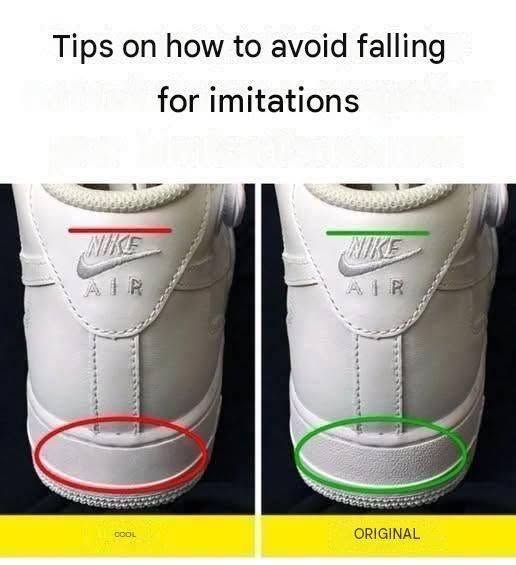
How to Recognize Authentic Shoes: Signs That Help You Spot Fakes
Buying a popular pair of sneakers can be exciting—until you discover that what looked like a great deal was actually a counterfeit.
Fake shoes have become increasingly difficult to identify. Some copies can look remarkably similar to the genuine product, especially in online photos. However, there are several details that can help you make a more informed decision before spending your money.
1. Check the seller first
One of the strongest clues is where the shoes are being sold.
Official brand stores, authorized retailers, and established sellers generally provide much stronger protection than unknown websites or social-media accounts.
Be particularly cautious when a seller offers a highly sought-after pair at a price that seems far below its normal retail value.
A low price doesn’t automatically mean the shoes are fake—but it is a reason to investigate further.
2. Examine the box
Authentic shoes usually come in packaging that is consistent with the brand’s normal standards.
Look at:
- The quality of the cardboard
- Printing sharpness
- Brand logos
- Product labels
- Size information
- Style or model numbers
- Barcode or QR information, where applicable
Spelling mistakes, blurry printing, incorrect fonts, poor-quality labels, or inconsistent information can be warning signs.
3. Compare the product code
Many genuine shoes have a style, model, or product number printed on the box and on a label inside the shoe.
Check whether the information matches.
If the code on the box doesn’t correspond to the shoe—or leads to a completely different model when checked through a legitimate brand source—that deserves attention.
However, remember that counterfeiters can copy legitimate codes, so a matching number alone doesn’t prove authenticity.
4. Inspect the stitching
Take a close look at the stitching.
On genuine shoes, stitching is generally neat and consistent. Uneven stitches, loose threads, excessive glue, crooked panels, or visibly sloppy construction can indicate a counterfeit.
Don’t judge based on one tiny imperfection, though. Even authentic shoes can occasionally have minor manufacturing flaws.
Look for an overall pattern of poor workmanship.
5. Study the logo
Logos are among the easiest details to compare.
Look closely at:
- Letter spacing
- Shape and proportions
- Position
- Font
- Embroidery
- Alignment
Compare the shoes with clear photographs from the brand’s official website.
Small differences can sometimes reveal a fake.
6. Pay attention to materials
Authentic footwear generally uses materials and finishes consistent with the manufacturer’s specifications.
If the leather feels unusually plastic-like, the fabric looks noticeably different, or the sole feels dramatically cheaper than expected, investigate further.
Again, material differences can occur between different releases, so compare your pair with the exact model and version, not merely another shoe from the same brand.
7. Look at the sole and overall shape
Counterfeit shoes may have subtle differences in shape.
Compare the pair with verified photographs and, when possible, an authentic pair.
Check:
- Sole pattern
- Heel shape
- Toe-box shape
- Panel placement
- Cushioning
- Branding underneath the shoe
A noticeably different silhouette can be a warning sign.
8. Check the inside label
Look inside the shoe for its size and manufacturing label.
Check the:
- Font
- Spacing
- Stitching
- Country-of-origin information
- Product/style code
- Size formatting
Poor printing or unusual formatting can be suspicious.
But don’t assume that a particular country automatically means the shoe is fake. Major brands manufacture genuine products in many different countries.
9. Don’t trust QR codes alone
A QR code, barcode, or scannable label isn’t proof of authenticity.
Counterfeiters can reproduce legitimate-looking codes and labels.
Use these details as part of a broader inspection rather than relying on one feature.
10. Beware of “too good to be true” deals
Price is one of the biggest warning signs.
If a shoe that normally sells for $200 is being offered for $35 with an urgent message such as “last pair” or “today only,” take a step back.
Ask yourself:
Why is this seller able to offer the product so cheaply?
Pressure to purchase immediately can be a deliberate sales tactic.
11. Check the return policy
A legitimate seller should clearly explain its return and refund policies.
Be cautious if:
- There is no physical business information.
- The seller refuses returns.
- Payment must be made through an unusual method.
- The website contains obvious spelling or grammar problems.
- Customer-service information is difficult to find.
A trustworthy purchase isn’t just about the shoe—it’s also about the seller.
12. Use several clues together
The most important rule is this:
There is rarely one single detail that proves a shoe is fake.
Instead, consider the entire picture.
A suspiciously low price + questionable seller + incorrect packaging + poor stitching + mismatched product information is much more concerning than one slightly imperfect stitch.
Final tip
If you’re buying an expensive or collectible pair, don’t rely solely on photographs or a seller’s claim that the shoes are “100% authentic.”
Whenever possible, buy from an authorized retailer or use a reputable authentication service.
A few minutes of careful checking can save you from paying authentic-shoe prices for a counterfeit pair.