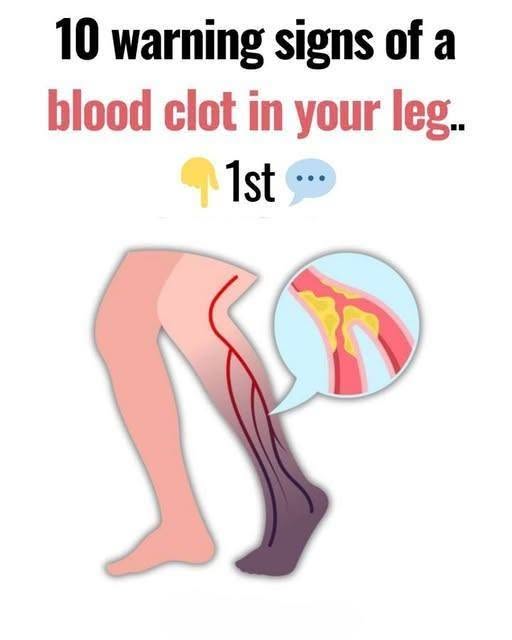
10 Warning Signs of a Blood Clot in the Leg You Should Know
A blood clot in a deep vein of the leg is called deep vein thrombosis (DVT). It can be serious because part of the clot can sometimes travel to the lungs and cause a pulmonary embolism, which can be life-threatening.
The tricky part is that DVT doesn’t always cause obvious symptoms. Knowing the possible warning signs can help you recognize when medical attention may be needed.
1. Swelling in One Leg
One of the most common signs is swelling, particularly when it appears suddenly and affects only one leg.
The swelling may occur in the calf, ankle, or entire leg.
2. Leg Pain or Tenderness
A DVT can cause aching, cramping, or tenderness in the affected leg.
Some people describe it as a persistent soreness that becomes more noticeable when walking or standing.
3. Unexplained Calf Pain
Pain concentrated in the calf—especially when it develops without an obvious injury—shouldn’t automatically be ignored.
It can have many causes, but persistent unexplained calf pain deserves medical evaluation.
4. Warmth in the Affected Area
The skin over a blood clot may feel warmer than the surrounding skin.
This can occur alongside swelling and discomfort.
5. Red or Discolored Skin
The affected area may appear red, reddish-purple, or otherwise different from the other leg.
Changes in skin color can also occur with other conditions, so they aren’t enough to diagnose a clot on their own.
6. A Heavy or Tight Feeling
Some people with DVT describe the affected leg as feeling unusually heavy, tight, or full.
The sensation may become more noticeable as swelling increases.
7. Veins That Look More Prominent
Veins near the surface of the skin may become more visible or swollen when normal blood flow through deeper veins is obstructed.
Again, prominent veins can have many harmless causes, including varicose veins.
8. Swelling That Gets Worse Over Time
Instead of appearing all at once, swelling may gradually become more noticeable.
If one leg continues to swell without a clear explanation, it is worth getting checked.
9. Symptoms That Appear Without an Injury
A pulled muscle, bruise, or other injury can explain leg pain and swelling.
But when similar symptoms appear without an obvious cause, particularly in one leg, DVT should be considered.
10. Several Symptoms Appearing Together
The combination of one-sided swelling, pain or tenderness, warmth, and skin discoloration is more concerning than any one symptom by itself.
DVT cannot be diagnosed based on symptoms alone. A healthcare professional may need to perform an examination and use imaging, such as an ultrasound.
🚨 Know the Emergency Warning Signs
A blood clot can become much more dangerous if it travels to the lungs.
Seek emergency medical attention immediately if you develop:
- Sudden shortness of breath
- Chest pain, especially pain that worsens with breathing
- Coughing up blood
- A rapid or irregular heartbeat
- Severe dizziness or fainting
These can be signs of a pulmonary embolism, which requires urgent treatment.
Who May Have a Higher Risk?
DVT risk can increase with factors such as:
- Recent surgery or hospitalization
- Long periods of immobility or bed rest
- Long-distance travel with prolonged sitting
- Previous blood clots
- Certain cancers
- Pregnancy and the postpartum period
- Some medications, including estrogen-containing treatments
- Certain inherited or acquired clotting disorders
Having a risk factor doesn’t mean you have a blood clot, but it can make unexplained symptoms more important to evaluate.
Don’t Try to Diagnose a Clot at Home
A sore or swollen leg can result from many things, including muscle injuries, infections, arthritis, and circulation problems.
You cannot reliably confirm or rule out DVT based on appearance or symptoms alone.
If you develop unexplained swelling or pain in one leg—especially if you have risk factors—contact a healthcare professional promptly.
And if breathing problems or chest pain suddenly appear, treat it as an emergency rather than waiting for the leg symptoms to get worse.
The Bottom Line
A blood clot in the leg isn’t always dramatic.
Sometimes the first clue is simply one swollen, painful, warm leg.
Knowing the warning signs can help you recognize when something isn’t normal—and getting medical attention quickly can make a critical difference.