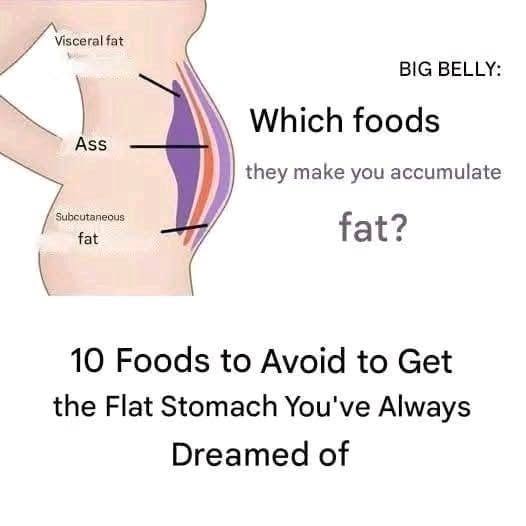
10 Foods to Avoid to Get the Flat Stomach You’ve Always Dreamed Of
A flatter stomach isn’t just about doing more crunches. What you eat can influence bloating, water retention, digestion, and overall calorie intake. If you’re trying to feel lighter and reduce abdominal bloating, consider limiting these 10 foods.
1. Sugary Soft Drinks
Sodas and other sugar-sweetened beverages can add a lot of sugar without making you feel full. Carbonated drinks can also contribute to temporary bloating.
2. Highly Processed Snack Foods
Chips, crackers, packaged snack cakes, and similar foods can be high in refined carbohydrates, sodium, and calories. Eating them frequently may make weight management more difficult.
3. Processed Meats
Bacon, sausages, hot dogs, and other processed meats can contain significant amounts of sodium and saturated fat. Eating less of them can support an overall healthier diet.
4. White Bread and Refined Baked Goods
White bread, pastries, cookies, and similar refined foods are often low in fiber and easy to overeat. Try replacing some refined grains with whole-grain options.
5. Deep-Fried Foods
French fries, fried chicken, and other fried foods are calorie-dense and can be harder for some people to digest comfortably.
6. Excessively Salty Foods
Too much sodium can cause your body to retain water, which may make your stomach and other areas appear temporarily puffier. Check labels on packaged and restaurant foods.
7. Candy and Other Added-Sugar Treats
Frequent consumption of sweets can make it easier to consume excess calories. Enjoy them occasionally rather than making them a major part of your daily diet.
8. Large Amounts of Alcohol
Alcohol can contribute substantial calories and may also cause temporary bloating. Limiting alcohol can make it easier to maintain a healthy weight.
9. Foods That Trigger Your Personal Bloating
Beans, onions, dairy products, or certain high-fiber foods can cause gas or bloating in some people. You don’t necessarily need to eliminate them—pay attention to which foods actually bother your digestion.
10. Oversized Portions
Even nutritious foods can contribute to weight gain when portions consistently exceed your body’s needs. Eating slowly and stopping when comfortably satisfied can help.
What to Eat Instead
Build meals around vegetables, fruits, whole grains, beans or other protein sources, lean proteins, and healthy fats. Drink plenty of water and aim for regular physical activity.
Most importantly, there is no specific food that magically melts belly fat. A flatter stomach usually comes from a combination of overall weight management, healthy eating, movement, adequate sleep, and reducing bloating when it occurs.
If your stomach remains persistently swollen, painful, or unusually bloated, it’s worth discussing it with a healthcare professional rather than assuming it’s simply a diet issue.